
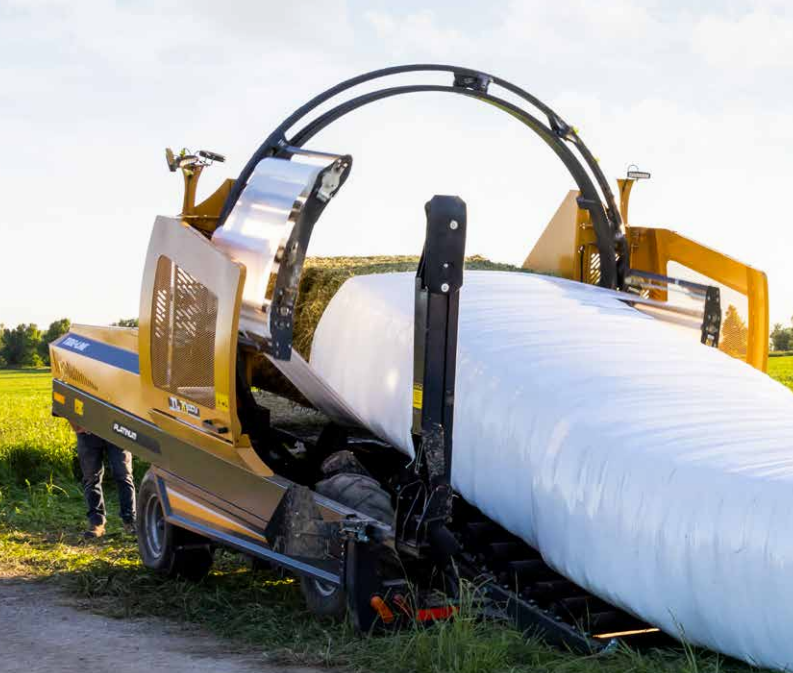
A bale wrapper seals freshly baled grass in airtight plastic film so it can ferment into good silage. Done well, wrapped bales give you flexible, high-quality feed that can be stored in the field or yard and fed out one at a time.
Done badly, the same bales turn mouldy, waste dry matter and cost you money twice. This guide explains how wrapping works, the choice between inline and individual machines, and the habits that protect feed quality from field to feed barrier.
How a bale wrapper works
Silage depends on keeping air out. Once a bale is sealed, the remaining oxygen is used up and lactic acid bacteria start fermenting the grass sugars, lowering the pH and preserving the crop.
A wrapper stretches film around the bale under tension, overlapping each layer so there are no gaps. Pre-stretching the film makes it cling tightly and seal itself, which is what keeps oxygen out for months of storage.
Inline vs individual bale wrapper
Individual wrappers
An individual wrapper rotates one bale at a time on a turntable or with satellite arms, then drops it off. Machines can be trailed, mounted or combined with the baler. They suit mixed farms and contractors who want each bale as a separate unit that can be moved and fed independently.
Inline wrappers
An inline machine pushes bales end to end through a wrapping ring, creating a continuous sealed tube. Because the bale faces touch, much less film is used per bale and wrapping is very fast. The trade-off is that the tube stays where it is made, so you need a suitable, well-drained site near where the feed will be used.
Tubeline sold its first inline bale wrapper in 1995 and it remains the company’s flagship product. Tubeline bale wrappers and bale processors are built in Ontario, Canada, and the wrappers come with a three-year warranty.
Which type suits your farm?
Think about where the silage will be fed and how you handle it. If bales are sold, moved between sites or fed in small numbers to different groups of stock, individual wrapping keeps everything flexible.
If you make large numbers of bales for one feeding point, an inline system can cut film costs and speed up the job considerably. Some farms use both, wrapping individual bales for outlying stock and building inline rows near the main yard.
Round bale wrapper tips for better silage
Most quality problems come down to timing, film and handling. These seven habits make the biggest difference with any round bale wrapper.
- Wilt the grass to the right dry matter before baling, as very wet or very dry crops ferment poorly.
- Make dense, well-shaped bales, since loose bales trap more air and sag in the stack.
- Wrap as soon as possible after baling, ideally within a couple of hours, before the bale heats up.
- Apply enough film: at least four layers is the usual minimum, with six for stalky, drier or long-stored crops.
- Check overlap and pre-stretch settings regularly, following the film and machine manufacturer’s guidance.
- Handle wrapped bales gently with a proper bale handler, never with spikes.
- Store bales on a firm, clean site and inspect them for holes through the season.
Silage bale wrapping: film, storage and damage
Good silage bale wrapping can be undone in storage. Birds, rodents, stubble and careless handling all puncture film, and every hole lets air in to spoil the feed around it.
- Stack bales on their flat ends where possible, as the end has more film layers.
- Choose a site away from trees, hedges and long grass that attract birds and vermin.
- Keep stacks to a safe, stable height and away from public rights of way.
- Patch any holes promptly with the correct silage tape.
- Keep bale stacks well away from watercourses and field drains.
Effluent and leaking bales can pollute water, so check the current rules for farmers on preventing water pollution when you plan where to store silage.
Choosing wrapping film
Film quality matters as much as the number of layers. Look for film designed for silage, with good cling, puncture resistance and UV stability for the length of time you plan to store. Lighter colours reflect more sunlight and can help keep bale temperatures down, while darker films are common and widely available.
Store film rolls in their boxes, out of direct sun and frost, until you need them.
Silage bags as an alternative to wrapping
For some farms, bagging silage is worth comparing with wrapping. A silage bagger packs chopped forage into a long, sealed plastic bag on any firm surface, with no need for a clamp.
Euro Bagging silage baggers and bags are used by farmers in more than 35 countries, and the manufacturer quotes dry matter losses of less than 8 per cent. Bagging suits farms that want to store chopped silage, crimped grain or by-products without building more clamp space.
Feeding out with a bale processor
Once bales are opened, a bale processor shreds and spreads them for feeding or bedding, saving labour and reducing waste compared with unrolling by hand. Matching your wrapper and processor to the same bale size keeps the system simple through the winter.
You can explore the wider range of agricultural equipment, including hay and silage machinery, tractors and attachments, with service backup from Devon.
Keeping your bale wrapper working
A breakdown in the middle of silaging is costly, because bales left unwrapped start to deteriorate. Service your bale wrapper before the season, checking rollers, gears, cutters, hydraulics and the film dispensers.
Keep a stock of common wear items so a small fault does not stop the job. Conagri can source agricultural parts such as belts, bearings, hoses and PTO shafts for the machines we supply and many other brands, with support available 24/7.
Getting the right bale wrapper for your farm
The right bale wrapper depends on how many bales you make, where you store them and how you feed them out. Individual machines give flexibility, inline machines save film and time, and bagging can suit chopped forage.
Our team in Crediton can talk you through Tubeline wrappers and processors and Euro Bagging systems. Call +44 (0)1392 984258 or make an enquiry ahead of the next silage season.
Frequently asked questions
How soon after baling should you wrap silage bales?
As soon as possible, ideally within a couple of hours of baling. Delays let the bale heat up and lose sugars, which leads to poorer fermentation and higher dry matter losses. In hot weather or with wetter crops, keeping the wrapper close behind the baler is even more important.
How many layers of film does a bale wrapper need to apply?
At least four layers is the usual minimum for round silage bales, and many farmers apply six for stalky, drier or long-stored crops or bales that will be moved a lot. Always follow the film and machine manufacturer’s guidance on overlap and pre-stretch settings.
What is the difference between an inline and an individual bale wrapper?
An individual wrapper seals each bale separately so it can be moved and fed on its own. An inline wrapper pushes bales end to end into a continuous sealed tube, which uses less film and works faster but must be built where the silage will be stored and fed.
Is silage bagging an alternative to bale wrapping?
Yes. A silage bagger packs chopped forage into a long sealed bag on any firm surface, without a clamp. Euro Bagging quotes dry matter losses of less than 8 per cent with its system. Bagging suits farms storing chopped silage, crimped grain or by-products.