
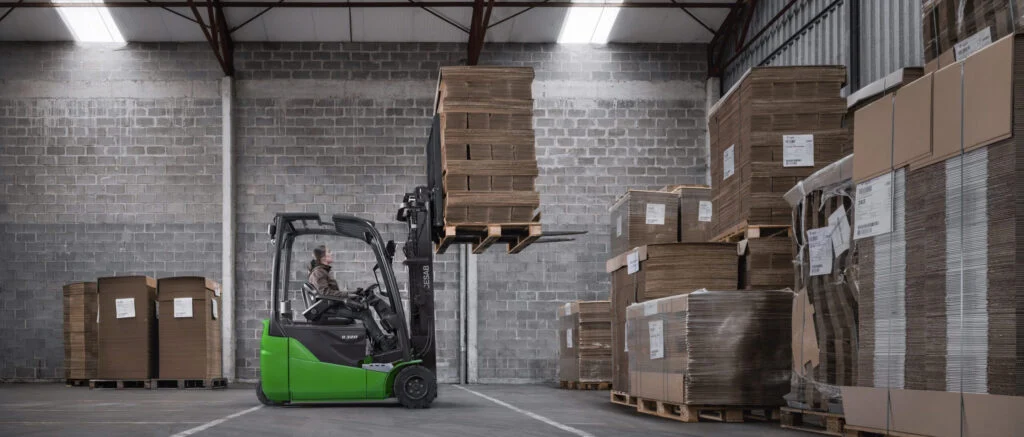
An electric forklift is now the default choice for many warehouses, factories and distribution yards. It runs quietly, produces no exhaust at the point of use and has far fewer moving parts than a diesel or LPG truck.
This guide compares electric and engine-powered forklifts, explains lithium-ion and lead-acid batteries, and covers charging, indoor and outdoor use, running costs and operator training. Use it to narrow down the right truck before you ask for a quote.
Electric forklift vs diesel and LPG
Each power source has a place. The right one depends on where the truck works, how many hours it runs each day and what loads it handles.
- Electric: zero emissions at the point of use, low noise, smooth control and low servicing needs. Best for indoor work and firm yards.
- LPG: quick cylinder changes and steady power, useful for mixed indoor and outdoor work, but it still produces exhaust and needs gas storage.
- Diesel: strong pulling power for heavy outdoor duty and rough ground, but noisy and unsuitable for enclosed buildings.
Electric trucks have also become more capable. An electric forklift truck can now handle heavy loads and long shifts that once needed an engine, especially with modern lithium-ion batteries.
Noise matters too. Electric trucks suit early starts, night shifts and sites near homes, and drivers suffer less fatigue without engine vibration.
Electric forklift batteries: lithium-ion vs lead-acid
The battery is the most expensive part of the truck and shapes how you run your shifts. Choosing the right chemistry matters as much as choosing the chassis.
Lead-acid batteries
Lead-acid is the traditional option and costs less to buy. It needs a full charge followed by a cooling period, regular watering and a ventilated charging area, because batteries give off gas while charging.
On multi-shift sites, you may need a spare battery and lifting gear to swap them. Performance can also drop as the charge runs down.
Lithium-ion batteries
Lithium-ion costs more upfront but needs no watering, gives steady power throughout the shift and can be opportunity charged during breaks. One battery often covers a full working day, and it typically lasts longer than lead-acid. Ask about the battery management system, warranty terms and expected cycle life when you compare quotes.
Battery specialists such as Hoppecke industrial batteries and charging systems supply battery systems, turnkey charging stations and fleet management for industrial trucks. Hoppecke, founded in Germany in 1927, has UK operations in Staffordshire with local assembly and large stockholding.
Planning your charging area
- Count how many hours each truck works per shift and how many shifts you run.
- Choose a charging point close to the working area but clear of pedestrian routes and traffic.
- Check the electrical supply can carry the chargers you need, using a qualified electrician.
- Provide ventilation, eye-wash facilities and spill protection where lead-acid batteries are charged.
- Display clear charging instructions and keep the area free of combustible materials.
Electric counterbalance forklift or warehouse truck?
An electric counterbalance forklift carries the load on forks at the front, balanced by the weight of the truck and battery at the back. It loads lorries, works in yards and moves pallets around the floor.
CESAB electric counterbalanced trucks, designed in Bologna since 1942, cover capacities up to 8.5 tonnes, alongside warehouse equipment and tow tractors for logistics, manufacturing and retail.
For narrow aisles and high racking, reach trucks and stackers make better use of space. Noblelift lithium-powered forklifts, reach trucks and stackers come from the world’s largest manufacturer of hand pallet trucks, which sells in more than 100 countries.
Working outdoors
Many electric trucks work outside on concrete and tarmac, but check the weather protection, tyre type and ground clearance. On gravel, mud or slopes, a rough terrain machine is the better tool.
Solid or cushion tyres suit smooth floors, while pneumatic or super-elastic tyres give more grip in yards. Keep the battery compartment and connectors dry, and avoid parking trucks outside in freezing weather where possible.
Total cost of ownership
Compare trucks on what they cost over their working life, not just the purchase price. An electric forklift usually costs more to buy, but less to run.
- Energy: electricity per shift is usually cheaper than diesel or gas.
- Servicing: no engine oil, filters, exhaust or clutch to maintain.
- Battery: allow for replacement over the truck’s life, or choose lithium-ion for a longer life.
- Downtime: fewer breakdowns and quicker servicing keep more trucks working.
- Finance: hire purchase or leasing spreads the cost and can be matched to the battery life.
Work out a cost per hour by adding purchase or finance costs, energy, servicing, battery replacement and downtime, then dividing by the expected working hours. That figure makes it easier to compare an electric forklift truck with an LPG or diesel alternative.
Operator training and safety
An electric forklift is quiet, so pedestrians may not hear it coming. Separate walkways from traffic routes where you can, and use lights, alarms and mirrors to warn people nearby.
Every operator needs proper training, assessment and written authorisation for the type of truck they use. HSE’s L117 guidance on rider-operated lift trucks sets out what training, supervision and examination are expected.
Carry out a pre-use check each shift, covering forks, chains, mast, brakes, steering, horn, tyres and battery connections. Report faults and take the truck out of use until they are fixed.
Electric forklift for sale UK: buying checks
When you compare trucks, start with load weight, lift height, aisle width and shift pattern. Then decide on battery type and charging before you choose the truck.
On a used truck, check the battery’s age and condition, mast and chain wear, fork heel thickness, hydraulic leaks and the service history. Ask whether the battery has been tested and how many hours it has worked.
Think about after-sales support too. A local dealer that stocks parts and can send an engineer quickly keeps downtime short, and short-term hire can cover a seasonal peak without adding to your fleet.
You can compare lithium-ion forklifts, pallet trucks and stackers across our material handling equipment range, with sales, hire and service from our base in Devon.
Getting the right electric forklift
The right electric forklift matches your loads, your floor and your shift pattern, with a battery and charging set-up planned around them. Get those right and the truck will run quietly and cheaply for years.
To compare models, batteries or finance, call Conagri on +44 (0)1392 984258, visit us at Burston Lane in Crediton, or send us an enquiry.
Frequently asked questions
Is an electric forklift better than a diesel forklift?
For indoor work and smooth, firm yards, an electric forklift is usually the better choice. It produces no exhaust at the point of use, runs quietly and has fewer moving parts to service. Diesel and LPG trucks still suit heavy outdoor duty, rough ground and sites without convenient charging, so match the machine to your working pattern.
How long does an electric forklift battery last?
It depends on the battery chemistry, the size of the battery and how hard the truck works. A lithium-ion battery can usually be topped up during breaks, so one battery often covers a full shift. A lead-acid battery normally needs a full charge and cooling period, so multi-shift sites may need a spare battery.
Can electric forklifts be used outside?
Many electric counterbalance forklifts work outdoors on firm, even surfaces such as concrete yards and loading bays, including in light rain. Check the truck’s weather protection rating, tyre type and ground clearance with the manufacturer. For gravel, mud or slopes, a rough terrain forklift is usually a better fit than a warehouse electric truck.
Do I need training to drive an electric forklift?
Yes. Anyone operating a rider-operated lift truck at work should be trained and assessed as competent, whatever the power source. Training should cover the specific type of truck, the site and the loads handled. Employers must also give written authorisation, refresh training periodically and make sure the truck is inspected and maintained.