
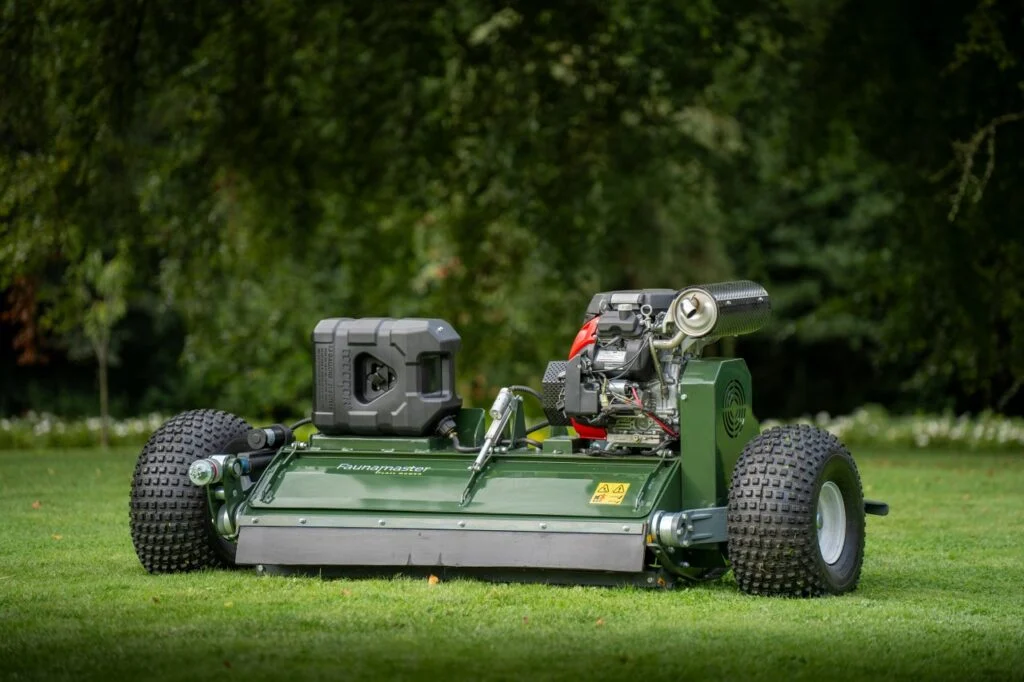
A flail mower cuts rough grass, weeds and light scrub and leaves a fine mulch behind, all in one pass. It is one of the most versatile mowers on a farm, smallholding or estate, from tidying paddocks to cutting back overgrown margins.
This guide explains how a flail works, how it compares with a topper and a disc mower, and whether a tractor or ATV model suits you better. It also covers hammers and Y-blades, offset mowing and cutting wildlife areas responsibly.
How a flail mower works
A horizontal rotor runs across the width of the machine, fitted with many small flails on swinging mounts. As the rotor spins, the flails stand out and strike the vegetation, chopping it repeatedly inside the hood.
A rear roller supports the machine, sets the cutting height and helps spread the mulch evenly. Because the flails can swing back when they hit a stone or stump, the machine copes well with uneven and littered ground.
Flail mower vs topper and disc mower
Each mower suits a different job, so think about the vegetation, the finish you need and what happens to the cut material.
- Flail mower: chops and mulches, handles long, thick and mixed growth, and keeps debris inside the hood. Best for margins, verges, scrub and rough grazing.
- Rotary topper: a few large blades on a vertical shaft. Lighter on power and lower in cost, ideal for regular topping of paddocks and pasture, but leaves clippings in rows or clumps.
- Disc mower: fast, clean cutting for hay and silage, leaving a swath for tedding and baling. Not designed for scrub, stones or mulching.
If you make hay or silage, you will still need a disc mower. A flail fills the gap for everything else around the holding.
Tractor flail mower or ATV flail mower?
Tractor-mounted and offset flails
A tractor flail mower runs from the PTO and suits larger areas, heavier growth and regular contract work. Match the working width and rotor to your tractor’s PTO power and linkage category. Heavier rotors and hammer flails need more power, so check the manufacturer’s rating before you buy.
Offset models slide or swing out to one side, so you can cut verges, ditch banks and along fences while the tractor stays on firm ground. Some can also be angled to work on banks and slopes.
SaMASZ mowers and flail mowers come from Poland’s largest maker of agricultural and municipal machinery, whose range of more than 300 machine types includes disc mowers, flail mowers and extension arms.
ATV and UTV flail mowers
An ATV flail mower reaches ground a tractor cannot, such as paddocks, woodland rides, wet corners and wildlife plots. It also causes less compaction and fits through narrow gates.
The Faunamaster FM130 flail mower is built for ATVs, UTVs and small Category 1 tractors, and was designed in Denmark by hunters, hobby farmers and nature enthusiasts for land and wildlife management.
For front-mounted mowing, the Rammy Flail Mower 120 ATV uses the Multifix connector, so it fits any ATV brand. The same mounting carries Rammy snowblowers in winter, keeping one quad busy all year.
If your quad has no PTO, look for a mower with its own engine, and check the towing and hitch ratings in the vehicle handbook. Keep speeds low on slopes and never mow across a steep bank.
Hammers or Y-blades?
The flails you fit change the finish, the power you need and how well the mower copes with rough ground.
Hammer flails
Hammers are heavy, forged flails that work like small mallets. They suit rough grass, rushes, bramble, scrub and stony ground, and they last well, but they need more power.
Y-blades
Y-blades are lighter, paired knives that cut more cleanly, giving a tidier finish on grass, paddocks and amenity areas. They need less power, but wear faster and are more easily damaged on stones.
Many owners fit hammers for estate and margin work and switch to Y-blades for paddock finishing. Whichever you choose, fit matching replacements of the same weight to keep the rotor balanced.
Cutting rough grass, scrub and wildlife margins
Field margins, hedge bases and rough corners are valuable habitat for insects, birds and small mammals. Plan your cutting to keep your land tidy without harming the wildlife it supports. Cutting margins on rotation, so part of the area stays uncut each year, gives insects and birds shelter through the winter.
- Walk the area first and remove wire, posts, stones and other debris.
- Set the cutting height high enough to avoid scalping the soil and to leave some cover.
- Cut from the centre of a field outwards, so animals can escape to the edges.
- Avoid cutting margins and hedge bases during the main bird nesting season.
- Cut long or woody growth in stages, lowering the height on a second pass.
- Keep bystanders and livestock well clear, and never lift the hood while the rotor is turning.
Before each job, check that the hood, rubber flaps and guards are complete and the PTO shaft guard is intact. Flails can throw stones a long way, so stop the rotor whenever someone approaches.
If you cut alongside hedgerows, check the GOV.UK hedgerow management rules for cutting and trimming before you start.
Buying a flail mower for sale
When you look at a flail mower for sale, start with the power and hitch of the tractor or ATV that will run it. Then decide on working width, offset or central mounting, and the type of flails for your main job.
On a used machine, check the rotor for balance and bent mounts, flail and bolt wear, bearings, gearbox and belt condition, and the roller. A vibrating rotor usually means missing or uneven flails, which you should fix before mowing. Ask about spare parts too, since flails, bolts and belts are wear items you will replace regularly.
Grease the bearings and roller daily, check belt tension and replace flails in opposite pairs to keep the rotor balanced. Our wider agricultural equipment range includes tractors, mowers and hay equipment to work alongside it.
Choosing the right flail mower
The right machine matches your power unit, your ground and the vegetation you cut most often. Choose the width, mounting and flails carefully, and it will keep margins, paddocks and verges tidy for many seasons.
For advice on tractor and ATV models, parts or finance, call Conagri on +44 (0)1392 984258, visit us in Crediton, or send us an enquiry.
Frequently asked questions
What is a flail mower used for?
A flail mower cuts rough grass, weeds, rushes, bracken and light scrub, and chops the material into a fine mulch. Farmers, landowners and contractors use it on field margins, verges, paddocks, orchards, set-aside and rough pasture. The chopped material breaks down quickly, so there is no need to rake or collect it after cutting.
Is a flail mower better than a topper?
A flail mower gives a finer, more even finish and spreads the clippings, and it is safer around stones and debris because the flails are enclosed. A rotary topper is usually cheaper and lighter on power, and suits regular paddock topping. For thick, overgrown or uneven ground, a flail is generally the better tool.
Should I use hammers or Y-blades on a flail mower?
Hammer flails are heavy and robust, so they suit rough grass, scrub, stony ground and light woody growth. Y-blades are lighter and cut more cleanly, giving a better finish on grass and paddocks with less power. Many owners choose by the main job and keep a spare set of the other type.
Can I use a flail mower on an ATV?
Yes. ATV and UTV flail mowers are built for smaller machines and reach ground a tractor cannot, such as wildlife margins, woodland rides, paddocks and steep or wet areas. Check that the mower suits your quad’s power, weight and hitch, and choose a model with its own engine if the vehicle has no PTO.