
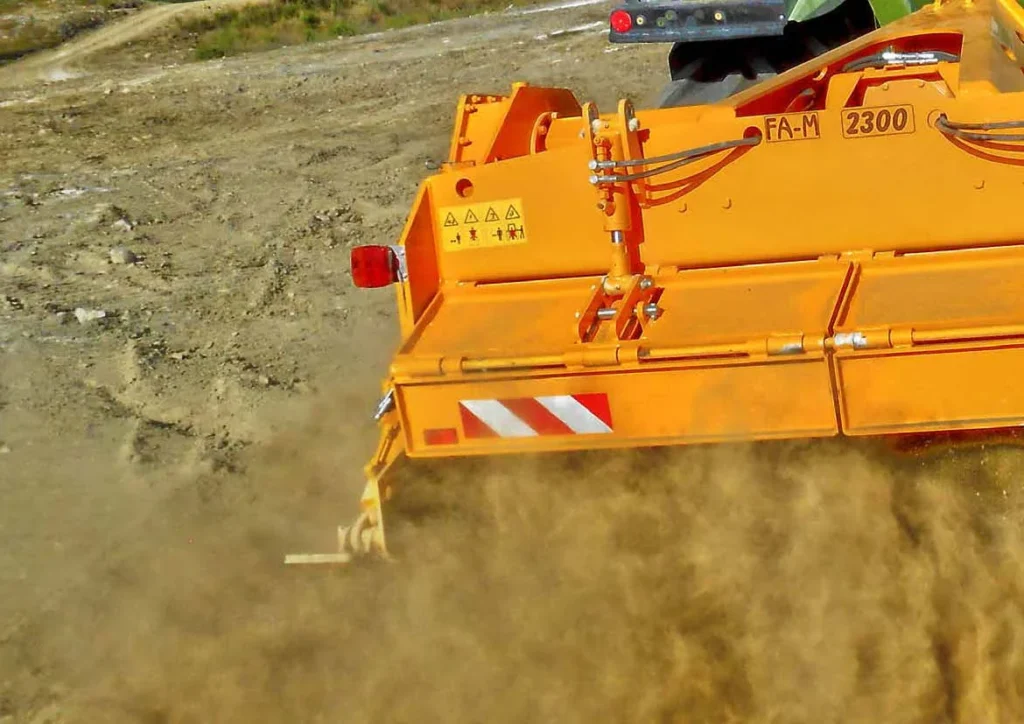
A forestry mulcher can turn overgrown, scrubby land into clean, usable ground in a single pass. Instead of felling, dragging, chipping and burning, the machine shreds brush, small trees and stumps where they stand and leaves a layer of mulch behind.
For estates, contractors, farmers and forestry companies, that makes it one of the most efficient tools for land clearing. This guide explains how forestry mulchers and forestry tillers differ, what they are used for, and how to choose the right one for your tractor and your work.
What is a forestry mulcher?
A forestry mulcher is a heavy-duty attachment, usually mounted on a tractor or a tracked carrier, with a rotor fitted with fixed or swinging hammers or teeth. As the rotor spins, it shreds vegetation, branches and wood into mulch.
Forestry mulchers are built far stronger than ordinary grass flail mowers. They have thicker housings, reinforced rotors and hardened teeth so they can handle saplings, stumps and the occasional stone without damage.
Surface mulching vs deep tilling
There are two broad ways to clear land with a rotor:
- Surface mulching shreds vegetation and stumps at or just above ground level. It is quick and suits scrub clearance, ride and track maintenance and firebreaks.
- Deep tilling grinds stumps and roots below the surface and mixes them into the soil. A forestry tiller leaves ground ready for replanting, pasture or construction in one pass.
Land clearing jobs a forestry mulcher can do
A forestry mulcher is versatile, and the same machine can handle a range of jobs through the year.
- Clearing scrub, bramble and gorse from neglected land
- Reclaiming overgrown pasture for grazing
- Preparing clear-felled sites for re-planting
- Cutting and maintaining firebreaks and fire lines
- Clearing rides, tracks, field margins and utility corridors
- Removing stumps and roots before construction or cultivation
Because the mulch stays on site, it protects the soil from erosion and returns organic matter as it breaks down. There is no need to haul brash away or burn it.
Plan the timing too. Where possible, clear scrub and trees outside the bird nesting season, check for protected species, and find out whether a felling licence or other consent is needed before you remove trees. A little homework before the machine arrives avoids delays and fines later.
Valentini forestry mulchers and tillers
Valentini’s forestry tillers combine mulching and tilling: the rotor shreds brush, stumps and roots and works the material into the ground in one pass. The Valentini forestry range covers different levels of work.
- SCORPION for surface mulching
- APACHE for multi-purpose clearing
- DEMONIO and CANNIBAL for deep stump and root destruction behind high-power tractors, grinding down to 50 cm
The range suits tractors from 70 to 400 HP, so there is an option for estates with mid-sized tractors and for contractors running high-horsepower machines.
6 expert tips for choosing a forestry mulcher
Work through these points before you buy or hire.
- Define the main job. Surface scrub clearance, firebreaks and pasture reclamation suit a mulcher. Stump and root removal for replanting or building suits a tiller.
- Match tractor power. Check your tractor’s PTO horsepower against the machine’s requirement. An underpowered tractor will stall in heavy material and wear the driveline.
- Check tractor weight and protection. Forestry work needs a heavy, stable tractor with a forestry guard, protected cab glass and belly protection.
- Consider working width. Wider machines cover ground faster but need more power and are harder to use in tight woodland.
- Look at teeth and rotor design. Fixed teeth suit stumps and wood. Swinging hammers can handle stones better. Ask about tooth life and replacement cost.
- Think about access. On steep or soft ground, a tracked carrier may reach places a wheeled tractor cannot.
Steep ground and difficult access
Not every site suits a tractor. Wet woodland, steep banks and snow can stop wheeled machines, and heavy tractors can damage sensitive ground.
TracSpider tracked vehicles for forestry keep working on steep slopes, mud and snow, handling gradients of up to 45 degrees with 360-degree manoeuvrability. Their tracks give traction and stability while keeping ground pressure low. You can see the wider range of forestry equipment from Conagri, from shredders and mowers to tracked vehicles and screeners.
Forestry mulcher services vs buying your own
Many landowners use contractors offering forestry mulcher services for occasional clearance. That avoids the capital cost and the need for a suitable tractor. If you clear land regularly, manage an estate, or want to offer land clearing as a contracting service yourself, owning a machine gives you control over timing and quality.
When you look at a forestry mulcher for sale, budget for teeth, bearings and servicing as well as the purchase price. Equipment finance through specialist partners, including hire purchase and leasing, can spread the cost.
Working safely with a forestry mulcher
Daily checks and maintenance
Mulching is hard on any machine, so a few minutes of checks each day saves expensive repairs. Look for missing, cracked or blunt teeth and replace them before they unbalance the rotor. Check tooth bolts for tightness, grease the rotor bearings and PTO shaft, and inspect belts or gearbox oil levels.
Clear wrapped wire and wood from around the rotor and skids with the engine off and the key removed. Check the housing, guards and counter-blades for cracks, and keep an eye on hydraulic hoses for chafing. Sharp, balanced teeth cut faster, use less fuel and put less strain on the tractor.
Protecting people on site
A forestry mulcher can throw debris a long way, so keep people and animals well clear of the working area and never work with the guards open. Check the site for wire, posts, stones and buried hazards before you start, and stop the rotor fully before leaving the cab or clearing a blockage.
Plan the work, wear suitable protective equipment, and make sure operators are trained. The HSE’s tree work and forestry safety guidance is a useful starting point.
Getting the right forestry mulcher for your land
The right forestry mulcher depends on what you are clearing, how deep you need to go, and the tractor or carrier you will run it on. Surface work suits a lighter mulcher; stumps, roots and replanting call for a forestry tiller and serious horsepower.
Conagri supplies Valentini forestry equipment with full sales, service and parts support. Tell us about your site and your tractor, and we will help you choose the right machine. Contact the Conagri team, call +44 (0)1392 984258, or visit us at Burston Lane, Crediton.
Frequently asked questions
What does a forestry mulcher do?
A forestry mulcher uses a heavy rotor fitted with hammers or teeth to shred brush, scrub, small trees and stumps into mulch, leaving it on the surface. It clears overgrown land in one pass without separate felling, chipping or burning, and the mulch layer helps protect soil from erosion while it breaks down.
What is the difference between a forestry mulcher and a forestry tiller?
A forestry mulcher works mainly at or just above the surface, shredding vegetation and stumps. A forestry tiller also works into the ground, grinding stumps and roots below the surface and mixing them into the soil. Tillers leave land ready for replanting, pasture or construction, but need more tractor power.
What size tractor do I need for a forestry mulcher?
It depends on the width of the machine, the size of material and whether you are surface mulching or deep tilling. Light mulchers suit smaller tractors, while deep stump and root grinding needs high horsepower. The Valentini forestry range suits tractors from 70 to 400 HP. Always match the machine to the tractor’s PTO power and weight.
Should I buy a forestry mulcher or use forestry mulcher services?
If you clear land only occasionally, hiring a contractor offering forestry mulcher services may be cheaper. If you manage woodland, estates or land clearing work regularly, or run a contracting business, owning a machine gives you control over timing and can pay for itself. Finance can help spread the cost.