
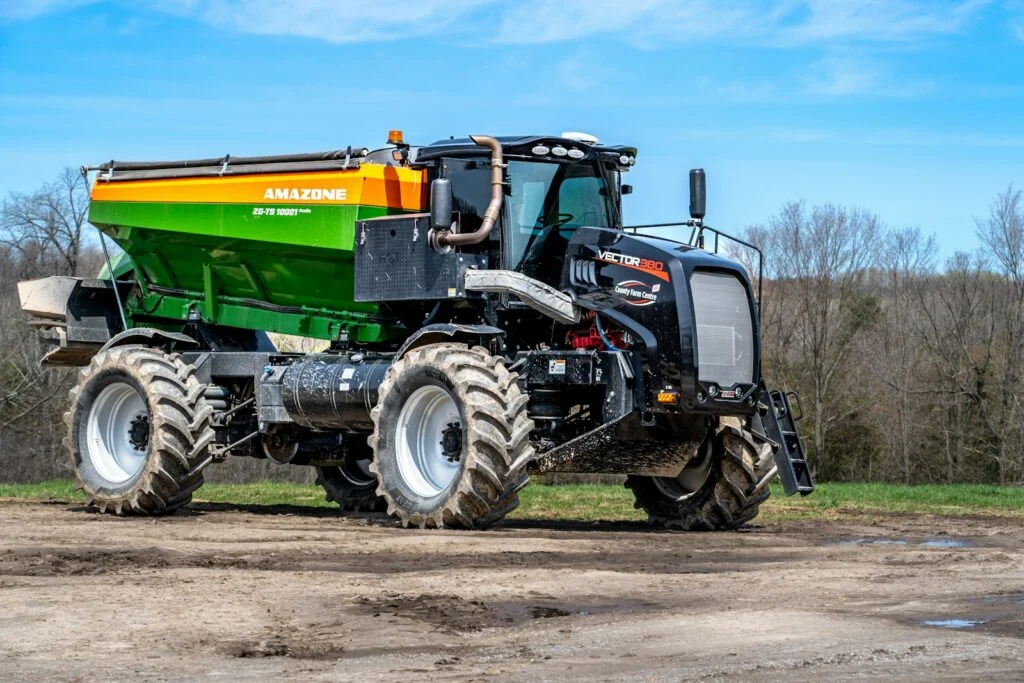
A muck spreader turns a heap of farmyard manure into a valuable source of nutrients and organic matter, but only if it puts the right amount in the right place. Autumn is a busy window for spreading, with stubbles open, grass fields grazed down and stores needing emptying before winter.
This guide walks you through the main design choices, from beater type to discharge layout, then covers calibration, spread pattern and the rules you need to follow. If you are weighing up a new or replacement muck spreader, it should help you ask the right questions before you buy.
How a muck spreader works
Every manure spreader does the same basic job. A floor conveyor, usually chains and slats, carries the load slowly to the rear, where rotating beaters or spinning discs tear the material apart and throw it across the ground. The speed of that floor sets how much lands per hectare, and the beater design decides how wide and how evenly it goes.
Most machines are trailed and driven from the tractor PTO, with hydraulics controlling the floor speed and the rear door or guillotine. Bigger bodies mean fewer trips to the heap, but they also mean more weight on the field and on the road, so size has to match your tractor and your ground.
Beater and discharge options explained
Vertical beater spreaders
A vertical beater spreader uses two or more upright rotors, usually fitted with flighting and cutting teeth, to shred material and fling it out wide. These machines cope well with heavy, fibrous farmyard manure and straw-rich muck, breaking it into small pieces for a broad, even pattern. Many farms and contractors choose them for spread width and their ability to handle long material.
Tubeline’s Nitro vertical beater manure spreaders are one example of this design. Conagri supplies the Tubeline range with sales, service and parts support, so you can talk through body size and specification with people who know the machines.
Horizontal beater spreaders
Horizontal beaters sit across the rear of the body. They tend to give a narrower spread, work well with well-rotted manure, compost and lighter material, and are often simpler to maintain. Some designs pair horizontal beaters with spinning discs underneath to widen the pattern.
For smaller holdings spreading short, crumbly muck over modest areas, a horizontal beater can be all you need. For contractors and larger livestock units handling fresh, strawy manure, the extra shredding of vertical rotors usually earns its keep.
Rear discharge spreader vs side discharge
A rear discharge spreader throws material behind the machine, which suits field work where you want a wide, uniform band that lines up with your bout widths. It is the most common layout for arable and grassland, and it pairs naturally with vertical beaters for width.
Side discharge machines, often called side-throw or flail spreaders, eject material to one side using a rotor or chains. They handle wetter, sloppier muck well and can place manure along margins or under fences. The trade-off is less control over spread width and evenness compared with a well-set rear discharge machine.
Ask yourself what you mostly spread, how wet it usually is, and whether you need to reach awkward places. The answers usually point clearly to one layout.
Choosing the right muck spreader for your farm
Before you look at brochures, write down your annual tonnage, the type of manure, the distance from heap to field and the tractor you plan to use. These four things narrow the choice of muck spreader quickly.
- Capacity: a larger body saves trips, but check the loaded weight against your tractor’s braking and towing limits and your soil’s bearing capacity.
- Material: long, strawy farmyard manure favours vertical beaters; compost and well-rotted muck suit either design.
- Floor and drive: look at chain and slat strength and how easily you can adjust floor speed from the cab.
- Running gear: wider flotation tyres reduce compaction and rutting on wet autumn ground.
- Road use: lights, brakes and overall width need to suit the lanes you travel.
- Tractor match: PTO power and hydraulic flow must be enough to drive the beaters under full load.
Tractor choice matters as much as the spreader. McCormick tractors from Conagri run from 49 to 310 HP, all Stage V compliant and GPS-ready, so there is room to match power to body size. You can also browse the wider agricultural equipment range for other handling and field machinery.
Spread width, evenness and calibration
An uneven pattern wastes nutrients. Heavy strips show up as lodged or dark green crop, while thin strips go short. Getting a muck spreader calibrated takes a little time, but it pays back in bought-in fertiliser savings and more even growth.
How to calibrate a muck spreader
- Weigh a typical load, on a weighbridge or by weighing the machine empty and full, so you know the tonnes per load.
- Spread the load at your normal forward speed and floor setting, then measure the length and width of the area covered.
- Divide the load weight by the area in hectares to get your application rate in tonnes per hectare.
- Adjust floor speed or forward speed to move the rate up or down, then repeat the check.
- Set your bout width so the edges of each pass overlap enough to even out the thinner margins of the pattern.
Check calibration again whenever the material changes. Fresh, wet manure from a cattle shed behaves very differently from heap-stored muck that has dried out over the summer.
Muck spreading rules and autumn timing
Manure is a valuable fertiliser, but in the wrong place it pollutes rivers. In England, the Farming Rules for Water set out where and when you can apply organic manures, including keeping set distances from watercourses, springs, wells and boreholes, and not spreading where there is a significant risk of run-off. Read the current government guidance on preventing water pollution before you plan autumn work.
Plan each application against soil and crop need, test soils regularly, and avoid waterlogged, flooded, frozen or snow-covered ground. If your land is in a Nitrate Vulnerable Zone, extra limits on timing and quantity apply, so check the closed periods for your soil type and manure. Whatever muck spreader you run, a few habits on the day help:
- Check the forecast and avoid spreading ahead of heavy rain.
- Keep well away from field drains and slopes that run towards water.
- Incorporate manure promptly on arable land to cut ammonia losses and smell.
- Record what you spread, where and when.
Looking after your manure spreader
Manure is corrosive and abrasive, so regular care keeps a muck spreader working season after season. Wash the machine down after use, especially the floor chains, beaters and guards, and grease bearings and drive points to the manufacturer’s schedule.
Check beater teeth and flighting for wear, keep floor chains properly tensioned and inspect PTO shaft guards before each season. Worn teeth reduce shredding and narrow the spread, which undoes all your calibration work. Look over tyres, lights and brakes before road work starts in earnest.
Getting the right muck spreader for autumn
The best muck spreader for you is the one that matches your material, your acreage and your tractor, then delivers an even pattern you can rely on. Vertical beaters suit long, heavy manure and wide spreading, horizontal designs suit lighter, rotted material, and side discharge machines fill niche jobs along margins.
If spreading the cost helps, machinery finance through our specialist partners, including hire purchase and leasing, can make a new machine easier to budget for. To talk through a Tubeline spreader or a tractor to pull it, contact the Conagri team, call +44 (0)1392 984258, or visit us at Crediton in Devon.
Frequently asked questions
What is the difference between a vertical and horizontal beater muck spreader?
A vertical beater muck spreader uses upright rotors to shred manure and throw it wide, which suits long, strawy farmyard manure and broad, even spreading. A horizontal beater sits across the rear of the body, usually gives a narrower spread and works well with compost and well-rotted material. Many designs add spinning discs to widen the pattern.
When can I spread muck in autumn?
You can spread when soil and crop need the nutrients and ground conditions allow it. Avoid waterlogged, flooded, frozen or snow-covered land and fields where run-off to water is likely. In England, follow the Farming Rules for Water, and if your land is in a Nitrate Vulnerable Zone, check the closed periods for your soil type and manure.
How do I calibrate a manure spreader?
Weigh a typical load, spread it at your normal forward speed and floor setting, then measure the area covered. Divide the load weight by the area in hectares to find tonnes per hectare. Adjust floor speed or forward speed to change the rate, recheck, and set your bout width so the edges of each pass overlap evenly.
Does Conagri supply Tubeline manure spreaders?
Yes. Conagri supplies Tubeline equipment, including Nitro vertical beater manure spreaders, with full sales, service and parts support. Tubeline machines are made in Elmira, Ontario, Canada. You can enquire through the Tubeline page on the Conagri website or call +44 (0)1392 984258 to discuss body size and tractor match.