
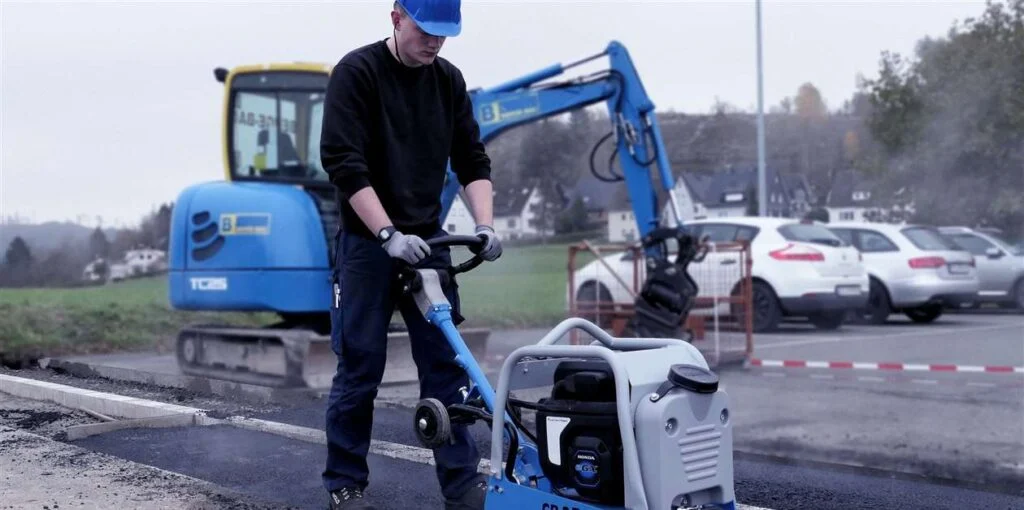
A plate compactor is the workhorse of paving, driveways, footpaths and trench reinstatement. It firms up sub-base and soil so the surface on top stays level and does not sink, crack or rut.
Yet compaction kit comes in several forms, and the wrong machine on the wrong material wastes time and gives a poor result. This guide compares the main options, explains how soil type and layer depth affect your choice, and covers vibration exposure for operators.
Why compaction matters
Loose material contains air gaps. Under load, those gaps close, and the surface above settles unevenly. Proper compaction removes the gaps before the surface goes down, increasing load-bearing strength and reducing water getting in.
Most failed patios, sunken trench lines and rutted driveways trace back to poor compaction: layers that were too deep, material that was too wet or dry, or a machine that was not suited to the job.
Types of compaction equipment
Forward plate compactor
A single-direction vibratory plate travels forwards only. It is light, easy to handle and ideal for block paving, thin layers of granular sub-base and general landscaping. It is the machine most people picture when they think of a plate.
Reversible plate compactor
This type can travel forwards and backwards and usually delivers more compaction force. It handles deeper layers and works well in trenches and confined areas where you cannot turn round. Heavier reversible plates suit groundworks, foundations and larger paving projects.
Rammer
A rammer, sometimes called a trench rammer or jumping jack, delivers a high-impact, up-and-down blow through a small foot. It is the best choice for cohesive soils such as clay and for narrow trenches, around pipes and next to walls.
Trench roller
This is a compact, vibrating double drum roller designed to fit inside trenches. Remote-controlled versions let the operator stand at the trench edge, away from the vibration and the risk of collapse.
Weber MT compaction equipment covers all four types: vibratory plates, reversible compactors, rammers and remote-controlled trench rollers. The German manufacturer has built compaction equipment since 1952 and introduced COMPATROL, the first continuous compaction control system for vibratory plates, in 2004.
Choosing plate weight and size
Plate weight and base plate width decide how much force reaches the ground and how quickly you cover an area. A light plate is easy to lift into a van and move around a garden, but it will only compact thin layers. A heavier machine compacts deeper and faster, but needs a ramp or lifting point to load it and more care on slopes.
Match the plate width to the job as well. A narrow plate fits trenches and edges, while a wider plate covers driveways and car parks in fewer passes. If you are unsure, ask for the effective compaction depth and the area covered per hour so you can compare like with like.
Matching the plate compactor to the soil
Soil type is the single biggest factor in choosing compaction equipment.
- Granular material such as sand, gravel and crushed stone responds best to vibration, so a vibratory plate is the natural choice.
- Cohesive soils such as clay and silt need impact force, so a rammer or a heavy reversible plate works better.
- Mixed fill often needs a heavier reversible plate or a roller to reach the full layer depth.
- Block paving needs a plate with a protective pad to bed blocks without chipping them.
Moisture matters too. Material that is too dry will not bind, while saturated material pumps and will not compact. Aim for damp, not wet.
Layer depth and passes
Every machine has an effective compaction depth. Spreading a thick layer and running a light plate over the top leaves loose material at the bottom that settles later. Build up in layers instead and check the manufacturer’s recommended layer depth for your plate compactor.
- Prepare and level the base, removing soft spots and organic material.
- Spread fill in even layers no deeper than the machine’s effective depth.
- Compact each layer with overlapping passes, working from the edges inwards.
- Check for movement under foot and add passes until the surface is firm.
- Repeat layer by layer until you reach the finished level.
- Finish paving with a protective pad on the plate where required.
Keep a note of how many passes each layer needed. On repeat jobs with similar material, that record helps you plan time and choose the right plate compactor from the start.
Vibration exposure and operator safety
Walk-behind compactors transmit vibration through the handle into the operator’s hands and arms. Regular, prolonged use can cause hand-arm vibration syndrome, a permanent and disabling condition. The HSE’s guidance on hand-arm vibration at work explains how to assess and control exposure.
- Check the machine’s vibration emission value and plan how long each operator can use it.
- Choose machines with well-isolated handles and keep anti-vibration mounts in good condition.
- Rotate operators on long jobs and keep a record of exposure.
- Use remote-controlled trench rollers where possible to remove the operator from the vibration.
- Wear hearing protection, safety boots and gloves, and keep hands warm in cold weather.
Also check for buried services before compacting near them, and never compact close to an unsupported trench edge.
Hire, buy and keep it running
If compaction is part of most jobs, owning a plate compactor or reversible plate usually makes sense. Many contractors keep a light forward plate for paving and a heavier reversible machine or rammer for groundworks and trenches.
Conagri’s Hire Centre can supply mini excavators and trenchers for the digging side of a job, with delivery across Devon and the Southwest. Before each use, check a plate compactor for loose bolts, fuel or oil leaks, damaged handle mounts and a missing belt guard. For longer life, keep the engine air filter clean, check the exciter oil and the rubber mounts, and replace worn base plates. We can source replacement parts and filters for the machines we supply and many other brands.
Choosing the right plate compactor
Start with the material and the layer depth, then choose between a forward plate, a reversible plate compactor, a rammer or a trench roller. Factor in vibration exposure and how often you will use the machine.
Conagri supplies Weber MT alongside our wider range of construction equipment, with full sales, service and parts support. Call +44 (0)1392 984258 or contact the team for advice on the right compaction kit.
Frequently asked questions
What is the difference between a plate compactor and a rammer?
A plate compactor uses vibration through a flat base plate and works best on granular material such as sand, gravel and crushed stone. A rammer delivers high-impact blows through a small foot and suits cohesive soils such as clay, narrow trenches and areas around pipes and walls.
When do you need a reversible plate compactor?
Choose a reversible plate when you need more compaction force for deeper layers, or when you are working in trenches and confined areas where you cannot turn a machine round. Reversible plates are common on groundworks, foundations and larger paving projects.
How deep can a plate compactor compact in one layer?
It depends on the machine’s weight, force and the material. Light forward plates suit thin layers for paving, while heavier reversible plates compact deeper layers. Always check the manufacturer’s recommended layer depth and build up fill in layers rather than compacting one thick layer.
Can using a plate compactor cause hand-arm vibration?
Yes. Walk-behind compactors transmit vibration through the handle, and regular prolonged use can cause hand-arm vibration syndrome. Employers should assess exposure using the machine’s vibration data, limit trigger time, rotate operators and choose low-vibration or remote-controlled machines where possible. Health surveillance may also be needed.