
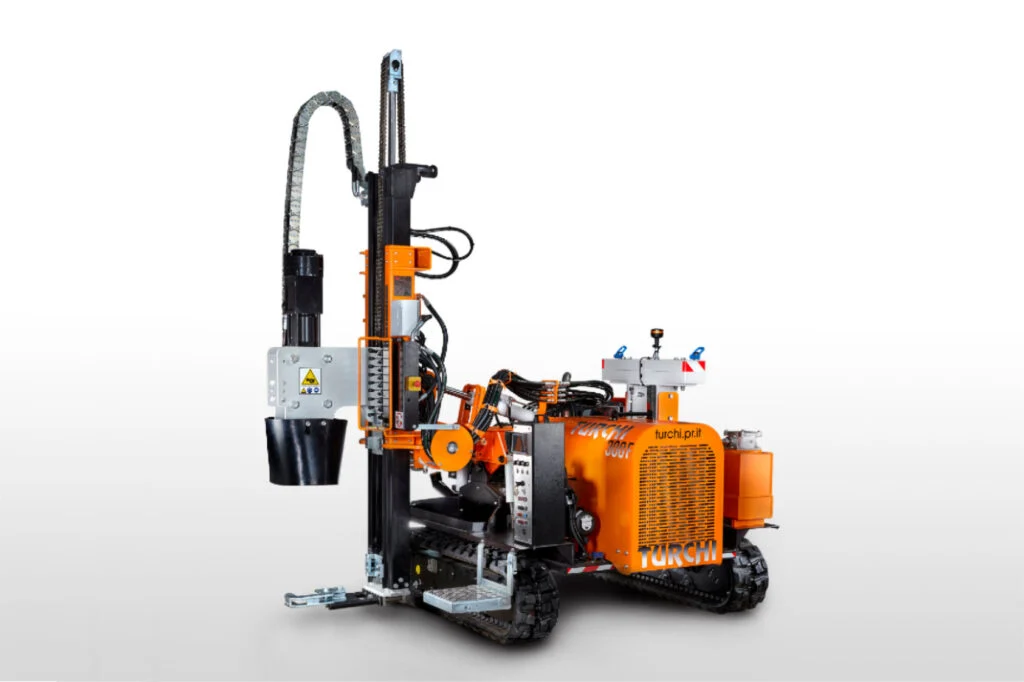
A post driver knocks fence posts, trellis stakes and steel piles into the ground with repeated hammer blows, so you skip digging and backfilling a hole. The result is quicker work and a firmer post, because the soil around it is compacted rather than disturbed.
The right machine depends on how many posts you install, what they are made of and where you are working. This guide compares the main types, from hand tools to self-propelled pile drivers, and explains how to match them to fencing, vineyards, solar farms and roadside guardrails.
What does a post driver do?
Every post driver works on the same principle: a heavy mass strikes the top of the post again and again, pushing it down in stages. Hand tools rely on your arms to lift the weight. Powered machines use hydraulics or air to cycle a hammer quickly, delivering far more energy per blow with much less effort.
Larger machines are often called a pile driver, especially when they install steel sections for solar arrays or highway barriers. The language overlaps, but the goal is the same: a straight, solid post at the right depth, first time.
Types of post driver
Manual fence post driver
A manual fence post driver is a heavy steel tube with handles, closed at one end. You drop it over the post and lift and slam it down. It is cheap, portable and fine for a few posts in a garden or paddock repair, but it is hard physical work and exposes you to vibration.
Tractor-mounted drivers
Mounted on the three-point linkage or a front loader, a tractor-mounted unit uses the tractor’s hydraulics to drive a hammer. It is the standard tool for farm fencing contractors, with side shift and tilt to keep posts plumb on uneven ground.
Check that your tractor has enough lift capacity and hydraulic flow for the unit, and add front ballast if needed. A well-matched tractor and driver can work steadily along a fence line all day, moving from post to post with little time lost between strikes.
Excavator-mounted drivers
An excavator-mounted attachment gives extra reach and works on slopes, banks and ditches where a tractor cannot safely go. It also lets you use a machine you already own on a fencing job.
Self-propelled hydraulic post driver
A self-propelled hydraulic post driver sits on its own tracked or wheeled chassis with a tall mast. These machines drive heavy steel piles for solar PV and guardrails accurately and quickly, and many can work with positioning systems to set out long rows.
Matching the post driver to the job
Think about the post material, the ground and the number of posts per day before choosing a machine.
- Farm and equestrian fencing: timber posts in soil suit a tractor-mounted driver with good side shift and tilt.
- Vineyard and orchard trellis: long, straight rows of stakes need accurate alignment and a compact machine that fits between rows.
- Solar PV piles: steel sections in large numbers call for a self-propelled pile driver with precise depth and line control.
- Road guardrails: posts often go in beside live traffic, so speed, stability and a short time on site matter.
- Stony or hard ground: check hammer energy and consider pre-drilling or a rock spike for difficult sites.
If you are setting up new rows of fruit or vines, it is worth looking at ground preparation too. The sports and orchards equipment range includes cultivators and specialist machinery for preparing orchard and vineyard ground before posts go in.
Turchi hydraulic post drivers
Turchi, a family business in Parma, Italy, developed the first hydraulic pile driving machine in 1970 and still builds its machines at its factory in Pilastro. Its hydraulic post drivers install piles for solar PV plants, road guardrails, vineyard trellising and agricultural fencing.
Turchi machines deliver up to 1,200J of hammer impact power, which gives you scope for harder ground and heavier sections. Conagri offers Turchi pile drivers with full sales, service and parts support, so you can discuss the right set-up for your posts and ground conditions.
Before you buy, ask about hammer energy, mast height, post sizes, side shift and tilt range, and how quickly parts can reach you during a busy season.
Tips for straight, solid posts
Even the best machine needs good technique. Most problems with leaning or loose posts come from poor set-up rather than a lack of hammer power, so a few habits make a real difference:
- Set out the line with string or a laser and mark every post position before you start.
- Use pointed timber posts and check that steel sections are the correct length for the required depth.
- Start each post slowly to set it plumb, then increase the striking rate once it is gripping.
- Check vertical alignment with a level after the first few blows and correct early.
- Avoid driving when the ground is waterlogged, as posts set in saturated soil can loosen as it dries.
- Keep strainers and corner posts deeper and heavier than line posts, because they carry the fence tension.
Ground conditions vary across a single field, so watch how each post behaves. If one suddenly stops moving, you may have hit a stone or old foundation; forcing it can split timber or bend steel, so pull it and try a little to one side.
Working safely when driving posts
Driving posts involves heavy, fast-moving parts and sometimes hidden hazards underground. Hand tools also expose you to vibration, so read the HSE guidance on hand-arm vibration if you or your team use a manual driver regularly. Follow a simple routine on every job:
- Check for underground cables, pipes and drains before driving anything, using plans and a cable locator.
- Look for overhead power lines, especially with tall masts on self-propelled machines.
- Wear a hard hat, eye protection, ear defenders, gloves and safety boots.
- Keep everyone clear of the hammer and mast while the machine is running.
- Never steady a post with your hands while a powered driver is striking it.
- Inspect hoses, couplings and the hammer before each shift and report any damage.
On manual work, rotate the job between people and take regular breaks. A powered post driver removes most of the vibration and strain from the operator, which is one more reason to upgrade if you install posts often.
Getting the right post driver for your work
For occasional repairs, a manual tool may be all you need. For regular fencing, a tractor-mounted unit pays back quickly, and for solar, guardrail or large trellis projects, a self-propelled hydraulic machine is the professional choice.
Fencing jobs often need other plant too. The Conagri Hire Centre offers mini excavators, trenchers and more for site preparation, and you can explore our full construction equipment range for larger projects. To talk through a Turchi post driver, contact our team or call +44 (0)1392 984258.
Frequently asked questions
What is the best post driver for farm fencing?
For regular farm fencing, a tractor-mounted hydraulic post driver is usually the most practical choice. It runs from the tractor hydraulics, drives timber posts quickly and keeps them upright with less effort than hand driving. Manual drivers suit a handful of posts, while excavator-mounted units help on steep banks or where you need extra reach.
What is the difference between a post driver and a pile driver?
The terms overlap. A post driver usually means a machine for fencing and trellis posts, while a pile driver handles heavier steel sections such as solar PV piles and guardrail posts, often on a self-propelled tracked chassis. Both drive the post into the ground with repeated hammer blows rather than digging and backfilling a hole.
Can a hydraulic post driver install solar panel piles?
Yes. Self-propelled hydraulic pile drivers are widely used to install steel piles for ground-mounted solar PV plants. Turchi hydraulic post drivers, offered by Conagri, are designed for solar PV plants, road guardrails, vineyard trellising and agricultural fencing, with up to 1,200J of hammer impact power.
Is a manual fence post driver safe to use?
It is safe if used properly, but repeated hand driving exposes you to hand-arm vibration and strain. Wear gloves, eye and ear protection and a hard hat, keep both hands on the handles, and never lift the driver above the top of the post. Share the work across a team and limit how long each person uses it.