
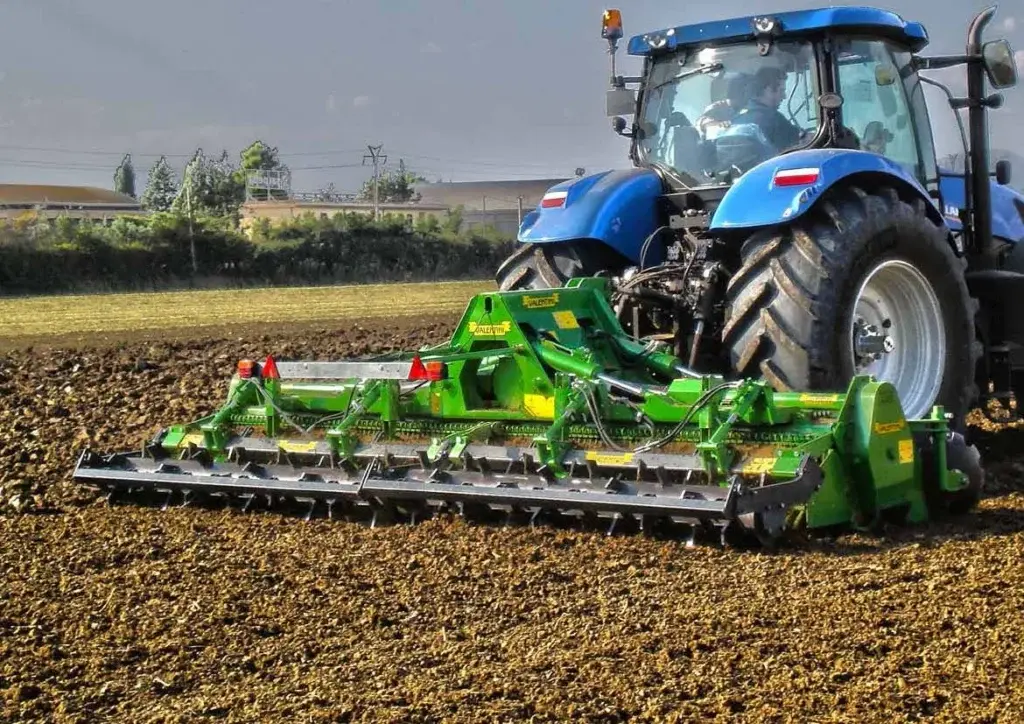
A power harrow turns rough, ploughed or part-worked ground into a fine, firm seedbed in a single pass. If you are getting ready for spring drilling, it is often the machine that decides how evenly your crop comes up.
This guide explains how the machine works, how it compares with a rotavator and a disc, and how to match one to your tractor. It also covers tines, rollers and the routine care that keeps the gearbox healthy for years.
What a power harrow does
A power harrow has a row of rotors on vertical shafts, each carrying a pair of tines. The PTO drives a main gearbox, which turns a gear trough running the full width of the machine, and neighbouring rotors spin in opposite directions.
Because the tines stir the soil sideways rather than lifting and turning it, the machine breaks clods without burying the surface or bringing up a fresh flush of weed seed. A levelling board smooths the finish, and a rear roller sets working depth and firms the seedbed.
Why spring seedbeds suit it
Spring windows are short and soil moisture is precious. The machine can work ploughed land down quickly, building fine tilth near the surface while leaving moist, firm soil below for the seed to reach.
Many growers mount a seed drill on top of the harrow so that cultivation and sowing happen together. Fewer passes mean less compaction and less time waiting for the weather.
Power harrow vs rotavator vs disc
All three machines cultivate, but they work the soil in different ways. Choosing the right one for each job saves fuel and protects soil structure.
- Power harrow: vertical rotors stir the soil without inverting it, giving a level, consolidated finish that is ideal for drilling. It needs more horsepower per metre than a disc.
- Rotavator (rotary tiller): a horizontal rotor with L-shaped blades cuts and throws soil, mixing in turf and residue. It is excellent for breaking new ground but can smear wet soil and over-work dry soil.
- Disc harrow: angled discs slice and mix stubble at higher forward speeds with lower power demand. The finish is rougher, so a disc is often a first pass rather than the last.
On many farms the plough, disc or tiller does the primary work and a power harrow finishes the job. Valentini power harrows and rotary tillers cover both sides of that equation, from the compact HERMES tiller up to the 12-metre IMPERIUM.
Sizing a power harrow to your tractor
Two numbers matter most: working width and the horsepower the gearbox is built to accept. Every manufacturer quotes a maximum input power for each model, so check the rating against your tractor’s PTO output rather than guessing.
A light harrow behind a big tractor risks gearbox and tine damage. A wide, heavy harrow behind a small tractor will crawl, and the weight hanging off the linkage can make steering light, so check rear lift capacity and add front ballast where needed.
Working width and road transport
Rigid harrows are fine for smaller fields and narrow gateways. Wider machines fold hydraulically, and Valentini folding power harrows close down to under 3m for legal road transport, with the agriculture range covering tractors from 30 to 600 HP.
Choosing a power harrow for compact tractor work
On smallholdings, vineyards and market gardens, a compact-tractor harrow has a narrower frame, a lighter gearbox and a Category 1 headstock. Check that your PTO speed and linkage category match before you buy.
If you are choosing the tractor at the same time, the McCormick tractor range runs from 49 to 310 HP, all Stage V compliant and GPS-ready, so you can match horsepower to the harrow width you need.
Tines, rotors and rollers
Harrows differ most in the parts that touch the soil. Getting these right makes a bigger difference to the finish than a few extra centimetres of width.
Tines
Tines wear fastest in stony or abrasive soils, and worn tines leave an uneven, shallow finish. Tungsten-faced tines last longer in tough ground, and quick-change fittings cut the time spent swapping them in the yard.
Rollers
The rear roller controls depth and how firmly the seedbed is pressed. A cage roller suits lighter, drier soils, a toothed packer roller gives stronger consolidation for drilling behind, and rubber-ring rollers resist clogging in sticky conditions.
Setting up a power harrow in the field
A few minutes of setup before the first pass pays back across the whole field. Work through these steps each time you change field or conditions.
- Check the soil. If it smears or forms a ribbon when rubbed between your fingers, it is too wet to work.
- Set the PTO shaft length, check the guards and make sure the slip clutch or shear bolt is in good order.
- Level the harrow side to side with the lift rods and front to back with the top link.
- Set working depth on the roller so the tines cultivate only as deep as the seed needs.
- Choose rotor speed and forward speed together. Faster rotors and slower travel give a finer tilth.
- Adjust the levelling board so soil flows evenly without building a ridge.
- Make a short test run, stop and dig to check depth, tilth and consolidation before carrying on.
Over-working soil into dust can damage its structure and lead to capping after rain. AHDB’s GREATsoils resources are a useful guide to assessing soil structure before and after cultivation.
Looking after the gearbox, tines and bearings
Grease the PTO shaft and rotor bearings daily during busy periods, and check the gear trough oil level regularly. Listen for new noises from the gearbox, because a bearing caught early is far cheaper than a failed trough.
At the end of the season, wash off soil, change the oil as the manual specifies, replace worn tines and store the machine under cover. You can find matching tractors, mowers and other kit across our agricultural equipment range.
Buying a power harrow for sale: new or used
Before you look at any power harrow for sale, list your tractor’s horsepower, your acreage, soil type and whether you will drill in the same pass. Those answers narrow down width, gearbox rating and roller type quickly.
Used machines can be good value, but check for gearbox noise, play in the rotor bearings, oil weeping from the trough and a worn roller. Spreading the cost through hire purchase or leasing can make a new machine easier to budget for ahead of a busy spring.
Getting the right power harrow for your farm
A well-matched harrow gives you a level, consistent seedbed and fewer passes, which saves time and protects your soil. Matching width to horsepower, choosing the right roller and keeping the gearbox serviced are the decisions that matter most.
If you would like help choosing a machine for your tractor and ground, call the Conagri team on +44 (0)1392 984258, visit us at Burston Lane in Crediton, or send us an enquiry.
Frequently asked questions
What is a power harrow used for?
A power harrow breaks down ploughed or cultivated ground into a fine, level seedbed. Its vertical rotors stir the soil sideways rather than turning it over, so it creates tilth without bringing fresh weed seed to the surface. Many farmers mount a drill on top to cultivate and sow in a single pass.
What size power harrow do I need for my tractor?
Start with your tractor’s PTO horsepower and rear lift capacity, then check the gearbox rating the manufacturer gives for each harrow width. A harrow that is too small for the tractor risks gearbox damage, while one that is too large will be slow and may need extra front ballast to stay safe on the road.
Is a power harrow better than a rotavator?
They do different jobs. A rotavator chops and mixes turf, residue and soil, which suits breaking new ground. A power harrow stirs soil without inverting it and leaves a firmer, more level finish behind its roller, which suits seedbed preparation for drilling. Many farms use a plough, disc or rotavator first and a power harrow last.
How often should a power harrow be serviced?
Grease the PTO shaft and bearings daily during work, check the gear trough oil level regularly, and inspect tines for wear before each job. At the end of the season, clean the machine, change the oil as the manual specifies, replace worn tines and store it under cover. A dealer service before spring catches bearing and gearbox issues early.