
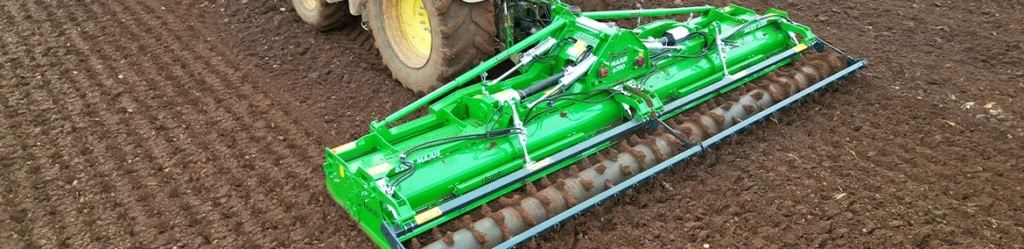
A rotavator is a tractor-mounted cultivator that chops and mixes soil with a spinning rotor of blades. On farms, smallholdings and market gardens, it breaks grassland, works in residue and prepares beds faster than almost any other single machine.
This guide is about tractor-mounted machines rather than pedestrian garden tillers. It covers how they work, when to use one, how to size it, and how to protect your soil while you do.
How a tractor rotavator works
The tractor PTO drives a central gearbox, which turns a side drive at one end of the machine. That drive spins a horizontal rotor fitted with flanges, each carrying several curved blades.
As the rotor turns, the blades slice the soil and throw it against a rear hood or tailboard, which breaks the clods further. Depth is controlled by side skids or a rear roller, and the hood position changes how fine the finish is.
Rotavator or rotary tiller?
The names are used for the same machine. Rotavator is the everyday UK term, while rotary tiller is common in manufacturer brochures, often for heavier professional models with gear side drives.
Gear side drives cope better with hard ground and long working days, while chain drives are lighter and suit smaller tractors and lighter soils.
When to use a rotavator, and when not to
A rotavator is at its best when you need to chop and mix in one pass. Typical jobs include:
- Breaking old pasture or a grass ley before reseeding or planting vegetables
- Working in crop residue, green manures and farmyard manure
- Preparing beds in market gardens, nurseries and soft fruit plots
- Renovating paddocks, headlands and rough corners
- Reworking ground between orchard or vineyard rows
Tiller or power harrow?
A power harrow stirs soil with vertical rotors and leaves a level, firm finish for drilling, but it struggles to break turf. The rotor and blades of a tiller chop and bury grass and trash far better, which is why many growers break ground with one and finish the seedbed with the other.
It is less suited to wet soils, which it smears, or to repeated passes that pound the soil into dust. It can also spread perennial weeds such as couch grass by chopping their roots into pieces, so deal with them first.
Sizing a rotavator to your tractor
The working width should at least cover the tractor’s wheel tracks, so you do not leave compacted wheelings behind. Offset mounting lets you work close to hedges, fences and tree rows.
Horsepower comes next. Each manufacturer gives a power rating for every width, and heavy clay or grassland needs more power per metre than worked, sandy soil, so check the rating rather than going by width alone.
Compact tractors and smallholdings
For smaller plots, a narrow tractor rotavator on a compact tractor is a flexible pairing. Šálek compact tractors go up to 60 HP, include narrow models for vineyards and orchards, and come with matching implements so one machine can work through the year.
Orchards, vineyards and larger farms
Between tree and vine rows, narrow and offset machines matter more than raw width. Dondi cultivators and orchard equipment include a dedicated vineyard and orchard line, alongside subsoilers and rotary ditchers.
At the other end of the scale, Valentini rotary tillers run from the compact HERMES up to large folding machines, covering tractors from 30 to 600 HP, and folding models close to under 3m for road transport.
Rotavator blades and working depth
Blades do the work, so their shape and condition decide the finish. Curved L-shaped blades cut cleanly through grass and residue, while straighter blades suit lighter work in cultivated soil.
Check blade bolts before each job and replace blades as a set on each flange to keep the rotor balanced. Cracked flanges or bent blades cause vibration that will soon reach the bearings and gearbox.
Daily and seasonal care
Grease the PTO shaft and rotor bearings daily in busy periods and check the side drive oil level, as this is where most failures start. Clear wrapped grass, string and wire from the rotor ends before they work into the seals.
At the end of the season, wash off soil, change the gearbox oil as the manual specifies and store the machine under cover. Fit new blades over the winter so the tiller is ready for spring.
Rotor speed and forward speed
A faster rotor and a slower forward speed give a finer tilth. A slower rotor and quicker travel leave a coarser finish that holds its structure better, which is usually the safer choice unless you are sowing small seed.
Protecting soil structure while you cultivate
A machine run at the same depth season after season can create a hard pan just below the blades. Vary the depth, dig a few test holes and use a subsoiler to break any pan you find.
Follow this routine each time you start a new field or plot:
- Check soil moisture. If it forms a ribbon between your fingers, leave it to dry.
- Inspect blades, bolts and flanges, and top up gearbox and side drive oil.
- Check the PTO shaft guard is complete and the shaft length is correct for your tractor.
- Set depth on the skids or roller and position the rear hood for the finish you need.
- Engage the PTO at low engine speed with the machine just clear of the ground, then lower it gradually.
- Make a short test run, then stop and dig to check depth, tilth and any smearing at the base of the worked layer.
- Stop the engine and remove the key before clearing anything wrapped around the rotor.
PTO shafts remain a serious cause of farm injuries. The HSE agriculture guidance covers guarding and safe working around powered implements.
Buying a rotavator for sale: new, used or hire
When you look at a used rotavator for sale, check for oil leaks at the gearbox and side drive, play in the rotor bearings, cracked flanges and a worn hood. A new machine costs more but comes with a warranty and parts support.
Ground often needs work before you cultivate, such as trenching drains or clearing scrub. Our equipment hire centre offers trenchers and mini excavators on flexible terms, from one to five days, with weekend and long-term rates.
Choosing the right rotavator for your ground
The best machine is one sized to your tractor, fitted with blades that suit your soil and used only when conditions are right. Get those three things right and it will break ground and prepare beds quickly for years.
For advice on matching a tiller to your tractor and plot, call Conagri on +44 (0)1392 984258, visit our yard in Crediton, or send us an enquiry.
Frequently asked questions
What is the difference between a rotavator and a rotary tiller?
In practice they are the same machine. Both use a horizontal rotor fitted with blades that cut and mix the soil, driven from the tractor PTO. Rotavator is the common UK name, while rotary tiller is the term many manufacturers use in their brochures, especially for heavier professional models.
What size rotavator do I need for my tractor?
Choose a working width that at least covers your tractor’s wheel tracks, so you do not leave compacted wheelings in worked ground. Then check the manufacturer’s horsepower rating for that width against your tractor’s PTO output. Heavy clay and grassland need more power per metre than light, worked soils.
How deep should a rotavator go?
Only as deep as the job needs. Shallow work is often enough for incorporating residue or preparing a seedbed, while breaking grassland needs more depth. Running at the same depth every year can form a compacted pan, so vary the setting and check the soil with a spade.
Can I use a rotavator on wet soil?
It is best avoided. A spinning rotor smears wet soil, sealing the surface and forming a compacted layer at blade depth that restricts roots and drainage. If soil forms a ribbon or sticks to the blades, wait for it to dry. Working it too wet can undo years of soil structure improvement.