
A stump grinder is the go-to tool for removing tree stumps, but it is not the only option, and it is not always the best one. The right approach depends on how many stumps you have, how big they are, what is around them and what the ground will be used for next.
This guide compares the main methods, from grinding a single garden stump to clearing a whole site with a forestry tiller, and covers the safety basics every operator should follow.
Your options for stump removal
There are four practical ways to deal with a tree stump. Each suits a different situation:
- Grinding: a stump grinder chips the stump away below ground level with minimal disturbance.
- Digging out: an excavator lifts the stump and main roots, leaving a hole to backfill.
- Forestry tilling: a tractor-mounted tiller shreds stumps, roots and brush across a whole area in one pass.
- Leaving it to rot: the cheapest route, but slow, untidy and not suitable where you need to use the ground.
For most jobs the choice is between the first three, so it pays to understand how each one works.
How a stump grinder works
A stump grinder uses a heavy cutting wheel fitted with hardened teeth. The operator lowers the spinning wheel onto the stump and sweeps it from side to side, taking off a little wood with each pass until the stump is below ground level. The result is a pile of chips mixed with soil, which you can use as mulch or remove.
Machines range from compact walk-behind units that fit through a garden gate to self-propelled tracked machines and large tractor-mounted or excavator-mounted grinders for contractors. The larger roots stay in the ground and rot away over time.
When grinding is the right choice
Grinding is ideal for single stumps in gardens, parks, verges and close to buildings, walls and paths. It causes little damage to the surrounding ground, and a tree stump grinder can work in tight spaces where an excavator would not fit.
After grinding
Rake out the chips and decide whether to keep them. Fresh wood chips are high in carbon and can tie up nitrogen as they break down, so do not dig large amounts straight into a planting bed. Fill the hollow with good topsoil, firm it, allow for settlement and reseed or turf. Some species send up suckers from the remaining roots, so keep an eye on the area for a season.
Stump grinder hire or buy?
If you have a handful of stumps, stump grinder hire or a specialist contractor is usually the sensible route. Arborists and grounds teams who remove stumps every week often find that owning a machine pays back. Either way, keep the cutting teeth sharp and replace worn ones, because blunt teeth slow the work and increase vibration.
Digging out stumps with an excavator
Digging out removes the stump and most of the main roots, which matters where you plan to lay foundations, drives or services. An excavator digs around the stump, cuts through roots and levers it out.
The downsides are the size of the hole and the disturbance to surrounding ground. You will need to backfill and compact properly, and dispose of a heavy root plate. Large, old stumps can have roots spreading well beyond the canopy, so the hole may be much bigger than you expect. For smaller stumps, a mini excavator from the Conagri Hire Centre, available from 1 to 1.8 tonnes with delivery across Devon and the Southwest, can make light work of the job.
Forestry tillers for land clearing
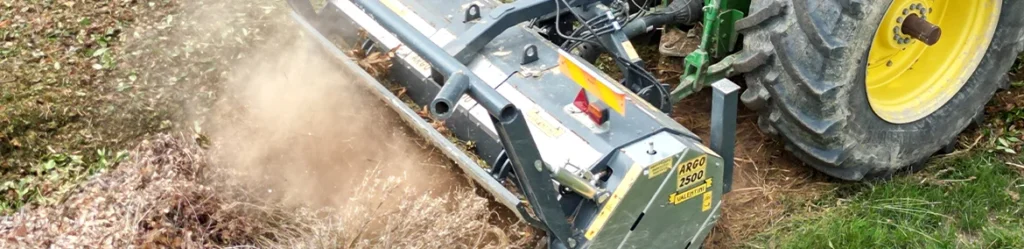
When you are clearing a whole area rather than one stump, grinding each stump individually is slow. A forestry tiller works on a different principle: its rotor shreds brush, stumps and roots and works the material into the ground in one pass, leaving land ready for replanting, pasture or construction.
The Valentini forestry range from Conagri runs from the SCORPION for surface mulching and the APACHE for multi-purpose clearing to the DEMONIO and CANNIBAL, built for deep stump and root destruction. These two models grind stumps and roots down to 50cm, and the range suits tractors from 70 to 400 HP.
On steep or soft sites, getting people and kit in and out is half the battle. TracSpider tracked vehicles handle slopes of up to 45 degrees, mud and snow, and turn through 360 degrees, which helps on difficult woodland ground.
One stump or a whole site? Choosing the method
Work through these questions to narrow down the right approach:
- Count the stumps. One to a few points to a stump grinder; dozens across an area point to a forestry tiller.
- Check what is next to them. Buildings, walls, paths and lawns favour grinding.
- Decide what the land is for. Foundations and services may need the roots dug out completely.
- Look at access. Narrow gates suit compact grinders; open fields suit tractor-mounted machines.
- Consider the ground. Wet or steep sites may need tracked machines and careful timing.
- Weigh up time and cost, including disposal of chips, root plates and spoil.
Stump grinder safety
Any stump grinder throws chips, soil and stones with real force, and the cutting wheel can cause serious injury. Read the HSE guidance on tree work and make sure operators are trained for the machine they use. On every job:
- Check for buried cables, pipes and drains before you start.
- Clear stones, metal and debris from around the stump.
- Wear eye and face protection, ear defenders, gloves and safety boots.
- Set an exclusion zone and keep people and animals well back.
- Keep guards and chip curtains in place.
- Stop the engine and wait for the wheel to stop before clearing chips or checking teeth.
Getting the right stump removal approach
For a single stump near a house, grinding is hard to beat. For foundations, dig it out. For land clearing, a forestry tiller does in one pass what would take days with a stump grinder. Match the method to the job and you will save time, cost and ground damage.
Explore our full forestry equipment range or, to discuss Valentini tillers, TracSpider vehicles or plant hire, contact the Conagri team or call +44 (0)1392 984258.
Frequently asked questions
Is a stump grinder better than digging out a stump?
For most garden and amenity stumps, yes. A stump grinder chips the stump below ground with little disturbance to lawns, paths and nearby structures. Digging out with an excavator removes the main roots as well, which is better where you plan to build foundations or lay services, but it leaves a large hole that needs backfilling and compacting.
What is the fastest way to clear lots of tree stumps?
For a whole site, a tractor-mounted forestry tiller is usually faster than grinding stumps one by one. Machines such as the Valentini DEMONIO and CANNIBAL shred stumps and roots down to 50cm and work the material into the soil in one pass, leaving land ready for replanting, pasture or construction. They need tractors from 70 to 400 HP.
Should I choose stump grinder hire or a contractor?
For one or two small stumps on open ground, hiring a compact machine can work if you are trained and confident. For large stumps, stumps near buildings or services, or difficult access, a contractor with the right machine and experience is usually safer and quicker. If you clear stumps regularly, owning the equipment may make more sense.
What safety equipment do I need to use a stump grinder?
Wear eye and face protection, ear defenders, gloves, sturdy safety boots and close-fitting clothing. Check for buried services and clear stones first, keep guards in place and set an exclusion zone, as chips and debris can be thrown a long way. Never reach near the cutting wheel while it is turning, and stop the engine before clearing blockages.