
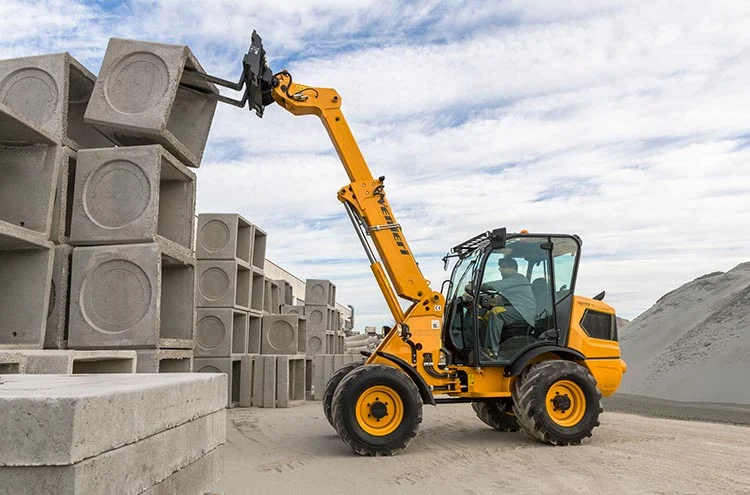
Telehandler hire gives you a machine that lifts, places and loads with reach no forklift can match, without the cost of owning one. It is a popular choice for builders, farmers and contractors who need lifting power for a project, a harvest or a busy season.
Booking the wrong machine wastes time and money, though. This guide covers what to check before you hire, from lift height and attachments to training and paperwork, and when buying makes more sense.
Why choose telehandler hire?
A telescopic handler combines the lifting of a forklift with the reach of a small crane. Its extending boom places pallets on scaffolding, stacks bales high in a barn, and loads trailers over the far side.
Hiring suits work that comes and goes. You get a well-maintained machine when you need it, with no capital tied up and no storage, servicing or depreciation to worry about. You can also match the machine to each job rather than making one model fit everything.
Telehandler hire is also a low-risk way to find out which size and specification suits your work. If you later decide to buy, you will know exactly what to look for.
Check lift height, reach and capacity
The most important decision is size. Before you contact a hire company, work out three things:
- Lift height: the highest point you need to reach, such as a scaffold lift, roof or top of a bale stack.
- Forward reach: how far you must place a load from the front of the machine, for example over a trench or across a trailer.
- Heaviest load: the weight of your heaviest regular lift, including pallet and packaging.
Do not judge a machine by its headline capacity alone. The safe load falls as the boom extends and rises, so a model rated for a heavy lift close in may manage only a fraction of that at full reach. Always read the load chart, and use the machine’s load indicator.
When you enquire about telehandler hire, give the hire company these three figures. They can then suggest a model with a comfortable margin, rather than one working at the limit of its chart all day.
Ground and access
Think about where the machine must go. Check gateways, building doors, overhead cables and ground conditions. Soft or sloping ground reduces stability, and a compact model may be a better fit for tight yards and low buildings.
Pick the right attachments
A telehandler is only as useful as what is on the front. Common attachments include pallet forks, general-purpose and high-tip buckets, bale handlers, muck grabs, lifting jibs and sweepers.
Tell the hire company what you plan to do so they can supply the right tools. Every attachment must be compatible with the machine and its load chart, as a heavy bucket or jib changes how much you can safely lift.
Ask whether the attachments you need can be added to your telehandler hire booking, and check the operator knows how to change and lock them on safely.
Telehandler hire, training and LOLER
Anyone using the machine must be trained and competent. Most construction sites expect a recognised operator card, and farms should make sure staff have suitable training too. Many hire companies ask who will operate the machine before they confirm a booking.
Telehandlers are lifting equipment under LOLER, the Lifting Operations and Lifting Equipment Regulations. That means:
- The machine and its attachments need a thorough examination by a competent person, usually at least every 12 months, or every six months for accessories and equipment used to lift people.
- Each lift must be planned by a competent person, with the right level of supervision.
- The operator should carry out daily pre-use checks of tyres, hydraulics, lights, alarms and safety devices.
- Any defect must be reported and the machine taken out of use until it is fixed.
Ask your hire provider for current examination records when the machine arrives. The HSE’s LOLER guidance explains your duties in more detail.
Planning the lift on site
Set up an exclusion zone around the working area and keep pedestrians out of it. Use a trained signaller where the operator’s view is restricted, and check for overhead power lines before you raise the boom.
Always travel with the load low and the boom retracted. Avoid slopes and soft ground when carrying a raised load, and never exceed the load chart for the attachment in use.
Short-term vs long-term telehandler hire
Short hires suit one-off jobs, such as unloading a delivery, fitting roof trusses or clearing out a building. A weekend can be enough for many homeowner and smallholding projects.
Long-term telehandler hire suits contractors with a run of work, or farms during harvest, silage and bedding-up. Longer agreements usually bring a lower day rate, and the machine stays on site so you do not pay for repeated delivery.
Whatever the length, plan delivery and collection with the hire company. Make sure there is firm, level ground to unload the machine and that someone is on site to sign for it and check its paperwork.
The Conagri Hire Centre offers Merlo telehandlers and Venieri telescopic loaders, with flexible hire periods from one to five days, weekend rates, long-term rates for contractors and delivery to site across Devon and the Southwest.
Telescopic loaders from Venieri
If your work leans towards loading and shovelling rather than high stacking, a telescopic loader may suit you better. VF Venieri machines are built in Lugo, in Italy’s Motor Valley, and Conagri provides full sales, service and parts support for the range.
Hire vs buy: which makes sense?
The hire vs buy decision comes down to how often the machine would work. Ask yourself these questions:
- How many weeks a year would it be busy?
- Do you have the skills, time and space to service and store it?
- Would one model suit all your jobs, or do you need different sizes?
- Could the money do more elsewhere in the business?
If the machine would be working most weeks, owning can cost less over its life. Conagri’s specialist partners offer hire purchase and leasing, which spread the cost of a telehandler over time. See the options on our machinery finance page.
Booking telehandler hire with Conagri
The right telehandler hire starts with a clear picture of the lift: height, reach, weight, ground and attachments. Add a trained operator and up-to-date LOLER records, and you have a safe, productive machine on site.
To check availability or talk through the right machine, use the hire enquiry form, call +44 (0)1392 984258, or contact the Conagri team. You are also welcome to visit us at Burston Lane, Crediton.
Frequently asked questions
Do I need a licence for telehandler hire?
There is no single legal licence, but the law requires anyone operating a telehandler to be trained and competent. Most employers and sites expect a recognised card or certificate, and many hire companies will ask who is operating the machine. Check your own insurance and the site rules before you book, especially for public or commercial sites.
How high can a hired telehandler lift?
Lift height depends on the model. Compact machines suit low buildings and tight yards, while larger models reach well above the eaves of a typical barn or house. Always check the load chart, because the safe load falls as the boom extends and rises. Tell the hire company your height, reach and heaviest load.
Is it cheaper to hire or buy a telehandler?
Hiring is usually cheaper if you need the machine for occasional jobs, seasonal peaks or a single project, as there is no outlay, servicing or insurance to cover. If the machine would be working most weeks of the year, buying, often with hire purchase or leasing, can work out better over its life.
What does LOLER mean for a hired telehandler?
LOLER covers lifting equipment, including telehandlers and their attachments. The machine needs a thorough examination by a competent person at set intervals, and lifts must be planned and supervised. A reputable hire company supplies the machine with current examination records, but you remain responsible for planning and running the lift safely.