
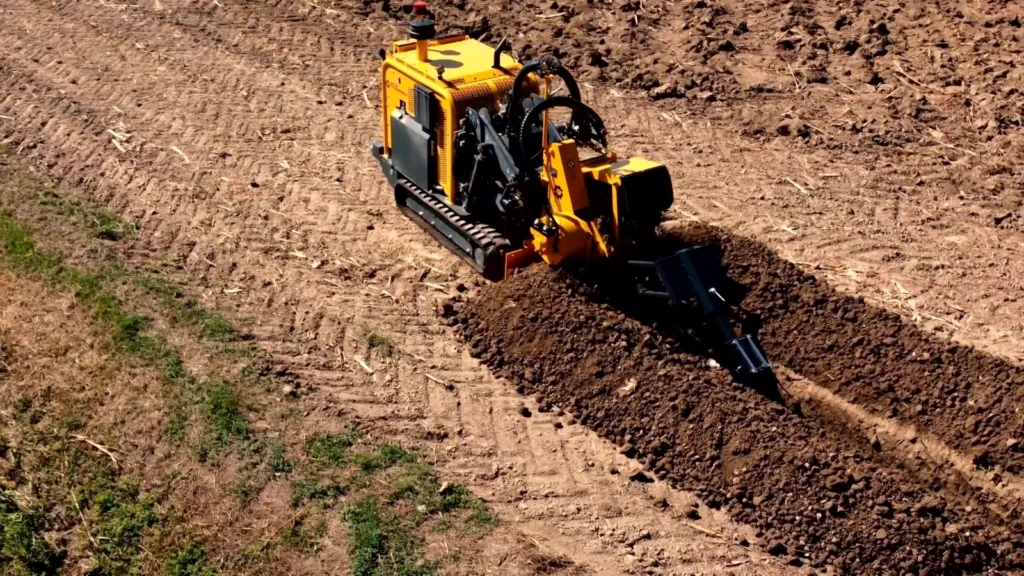
A trencher cuts a narrow, even trench in one continuous pass, which makes it the fastest way to lay drainage, cables, water pipes and irrigation lines. Where a digger scoops and swings, a trenching machine simply keeps moving forward.
If you have a long run to dig, the right machine can turn a two-day job into an afternoon. This guide explains how these machines work, which type suits which job and when hiring makes more sense than buying.
What is a trencher?
So, what is a trencher in practical terms? It is a machine with a powered digging tool, usually a chain or a wheel, that cuts soil and lifts the spoil out to one side of the trench. Depth and width are set by the tool fitted, so every metre of trench comes out the same.
Trenchers come in several forms: walk-behind units for gardens and sports grounds, ride-on and tracked machines for contractors, and tractor-mounted units driven from the PTO for farm and estate work.
Types of trencher
Chain trencher
A chain trencher uses a toothed chain running around a boom, much like a large chainsaw. It digs deeper, narrower trenches and suits soil, clay and mixed ground. Chain machines are the usual choice for drainage, water mains and cable runs where depth matters.
Wheel and micro-trenchers
A wheel trencher uses a toothed cutting disc. It copes well with hard and stony ground and leaves a clean, vertical cut. Micro-trenchers are a narrow version used to cut slots in roads and footpaths for fibre broadband, keeping disruption and reinstatement to a minimum.
For tractor owners, Valentini RA trench wheel cutters dig precise trenches up to 1.45m deep for cables, pipes and drainage, even in hard ground. They are PTO-driven, so they make use of a tractor you may already own.
Remote-controlled trenchers
Some compact tracked trenchers can be driven by radio remote control. The operator stands back from the cutting tool, the dust and the vibration, and can watch the line closely from the side. This suits tight sites, slopes and sports pitches where a seated machine would be awkward.
What trenchers are used for
Most trenching falls into a few familiar jobs:
- Field drainage and soakaways on farms, paddocks and sports grounds
- Irrigation lines for orchards, vineyards, nurseries and turf
- Power and data cables to outbuildings, lighting and charging points
- Fibre broadband and telecoms ducting along verges and footpaths
- Water pipes to troughs, standpipes and new buildings
- Foundations for fencing, edging and kerbs
Conagri supplies MakBrent trenching equipment for construction work and MakBrent machines for sports grounds and orchards, where neat, narrow trenches and minimal surface damage really matter.
Matching the machine to ground and trench size
Ground conditions decide more than anything else how well a job goes. Light loam and sandy soils cut easily with almost any chain machine, while heavy clay can clog the chain and slow progress. Flinty or stony ground wears teeth quickly and often calls for a wheel cutter or a heavier tool.
Think about the finished trench as well. A cable or irrigation pipe may only need a slot a few centimetres wide, while land drains need room for the pipe and a layer of gravel around it. Wider cuts mean more spoil, more backfill and more time, so dig only as wide as the job needs.
Teeth, chains and wear
Digging teeth are the main wear part. Check them before every job and replace worn or missing teeth in sets, as a blunt chain cuts slowly and strains the drive. Keep chain tension within the manufacturer’s range and clean off packed clay at the end of each day.
Trencher vs mini digger
A mini digger is the more versatile machine. It can dig holes, pits and footings, load spoil and lift kerbs, so it suits mixed jobs. For a long, straight run of consistent depth, though, a trencher wins on speed and neatness.
- Speed: a trenching machine cuts continuously, while a digger works bucket by bucket.
- Width: narrow trenches mean less spoil to move and less backfill.
- Surface damage: a compact machine leaves a slim scar that heals quickly on turf.
- Flexibility: a digger handles corners, obstacles and wider excavations far better.
Many contractors use both: a trenching machine for the long runs and a mini digger for chambers, connections and awkward sections.
Planning a trenching job safely
Before any machine breaks ground, find out what is already buried. Striking a power cable or gas pipe is dangerous and costly, so plan the route properly.
- Get utility plans for the area and check them against the site.
- Scan the route with a cable avoidance tool and mark any services.
- Hand dig trial holes where services are close to the line.
- Set the trench depth and width for the pipe or cable you are laying.
- Keep people and vehicles clear of the cutting tool and the trench edge.
- Backfill and compact promptly, or support and fence any trench left open.
Trenches can collapse without warning, even shallow ones in loose ground. The HSE’s guidance on excavation safety explains when support is needed and how to keep people safe around open trenches.
Trencher hire or buy?
If you dig trenches a few times a year, trencher hire is usually the sensible choice. You get a well-maintained machine for the days you need it without storage or servicing costs.
If trenching is a regular part of your work, buying starts to make sense, particularly a tractor-mounted unit that shares a power source you already own. Conagri’s Hire Centre in Crediton includes trenchers and mini excavators, with flexible hire periods, weekend rates and delivery across Devon and the Southwest.
Getting the right trencher for the job
Choosing the right machine comes down to ground conditions, trench depth and width, the length of the run and how often you will use it. Chain machines suit depth in soil, wheel cutters suit hard ground, and compact remote machines suit delicate surfaces.
Our team can help you match the machine to the job, whether you want to hire for a weekend or buy for the long term. Call +44 (0)1392 984258 or send us your project details and we will point you to the right option.
Frequently asked questions
What is a trencher used for?
A trencher cuts narrow, consistent trenches for drainage, irrigation, water pipes, power cables and fibre ducting. Because it digs continuously rather than bucket by bucket, it is much faster than a digger on long, straight runs and leaves less spoil to move and backfill.
Is a trencher better than a mini digger?
For long, straight trenches of steady depth, a trencher is usually faster and neater. A mini digger is more versatile for corners, chambers, footings and wider excavations. Many contractors use a trencher for the main run and a digger for connections and awkward sections.
How deep can a trencher dig?
Depth depends on the machine and the tool fitted. Small walk-behind units suit shallow cable and irrigation trenches, while larger chain and wheel machines go much deeper. Valentini RA trench wheel cutters, for example, dig up to 1.45m deep for cables, pipes and drainage.
Can I hire a trencher in Devon?
Yes. Conagri’s Hire Centre in Crediton offers trenchers and mini excavators with flexible hire periods from one to five days, weekend rates and long-term rates for contractors. Delivery to site is available across Devon and the Southwest, and the team can advise on the right machine for your ground.