
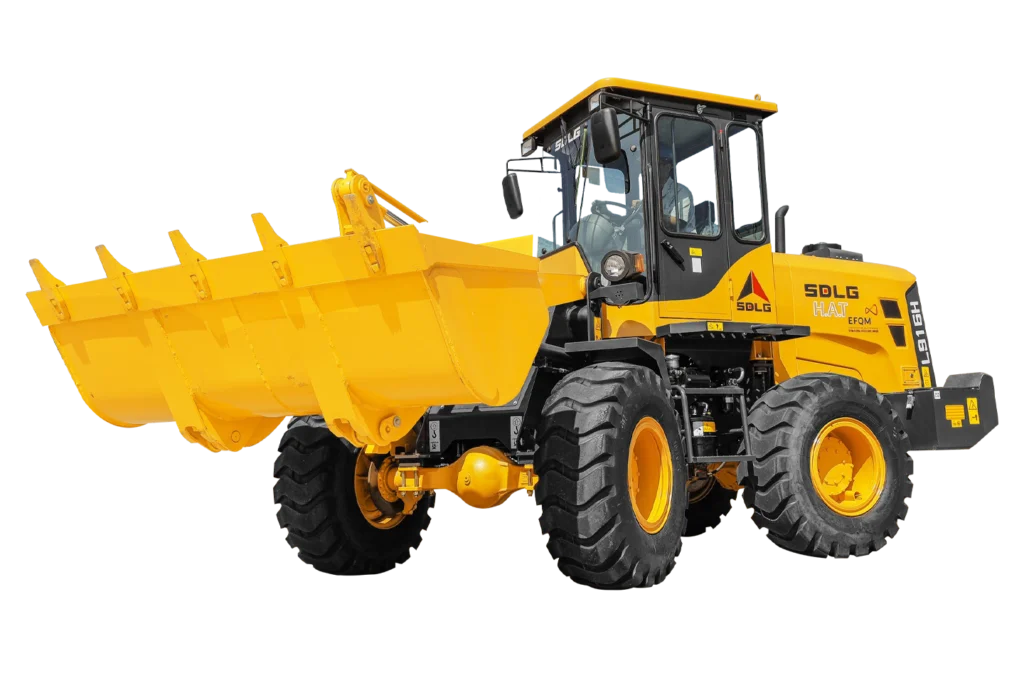
A wheel loader is often the hardest-working machine on a farm, yard or construction site. It shifts aggregate, loads trailers, pushes up silage, moves pallets and keeps the yard tidy, sometimes all before lunch.
Buying the wrong size, though, costs you money every day you run it. This guide walks you through the checks that matter, from bucket capacity and rated load to compact machines, fork lift loaders and finance, so you can choose with confidence.
What a wheel loader does best
A loader is built to scoop, carry and load loose material over short distances. Unlike a tracked machine, it travels quickly on rubber tyres, works well on hard standing and moves between jobs without a low-loader.
That makes it a natural fit for yards, quarries, depots and livestock units where material is moved many times a day. If most of your work is digging below ground level, an excavator will suit you better. If it is loading, stockpiling and carrying, a loader usually wins.
Sizing your wheel loader: bucket and rated load
Start with the job, not the machine. Think about what you load most often, how dense it is and what you load it into.
Bucket capacity
Bucket size is quoted in cubic metres, but a bigger bucket is not always better. Light material such as silage, woodchip or grain can take a large bucket, while wet soil, sand or crushed stone weighs far more for the same volume.
Match the bucket to the trailer or hopper you are filling. As a rule of thumb, three or four passes to fill a trailer keeps cycle times short without overloading the machine.
Rated load and tipping load
The rated operating load is the weight the loader is designed to lift and carry safely in normal use. It sits well below the static tipping load, which is the point at which the machine would tip forward. Always work to the rated figure and check the manufacturer’s rating for the specific bucket or forks you fit.
Compact wheel loader or full-size machine?
This is the decision most buyers wrestle with. A compact wheel loader is lighter, narrower and easier to manoeuvre in sheds, between buildings and through gateways. A full-size machine carries more per pass and copes better with long shifts of heavy loading.
- Compact machines suit smaller farms, equestrian yards, landscaping and confined spaces where access and low ground pressure matter.
- Mid-size machines cover general farm loading, feed mixing and yard work with a good balance of reach and agility.
- Full-size loaders suit quarries, aggregate yards and construction sites moving large volumes every day.
- Articulated steering on most loaders gives a tight turning circle, so check the articulation angle if you work in narrow buildings.
Farm loaders
For farms, the SDLG agricultural loader range is a useful reference point. The compact L918H offers a 1,800kg rated load with a 1.0m³ bucket for smaller farms and tight spaces, while the L953H delivers 5-tonne performance for larger operations.
Construction loaders
On site, productivity and uptime matter most. The SDLG construction loader line-up runs from 5-tonne general-purpose loaders to 10-tonne heavy-duty machines, with bucket capacities from 2.8m³ to 7.0m³. SDLG positions these machines for operators running under 1,500 hours a year who want reliable, simple machines at a competitive price.
If your work calls for something different, VF Venieri wheel loaders and telescopic machines are built in Lugo, Italy, where the company has made earthmoving machinery since 1948. Venieri also builds multifunctional backhoe loaders, which can suit contractors who need to dig and load with one machine.
Attachments that make a wheel loader earn its keep
The right attachments turn a loader into a year-round tool rather than a seasonal one. Before you buy, check the quick coupler type and the hydraulic flow available for powered tools.
- General-purpose and high-tip buckets for soil, grain and light bulk material
- Pallet forks for bags, blocks and building materials
- Silage and muck grabs for clamp and yard work
- Bale spikes and squeezes for round and square bales
- Sweepers and snow blades for keeping yards and roads clear
Fork lift loaders for yards and rough ground
A standard warehouse forklift struggles on gravel, mud and uneven concrete. A fork lift loader is a wheel loader adapted for pallet and bulk handling, so it keeps working where a conventional truck cannot.
The SDLG L933FL is a good example, adding fork lift capability with a 3,000kg rated load. It handles pallets, bags of feed or fertiliser and yard materials, and can swap to a bucket for loading work. For a mixed farm or builders’ merchant, one machine doing both jobs can save buying two.
Wheel loader for sale UK: what to check first
When you start looking at wheeled loaders for sale, it pays to work through a short checklist before you visit or ask for a quote.
- List the three jobs the machine will do most often and the heaviest load it will lift.
- Measure your tightest doorway, gateway and shed height.
- Estimate annual hours, as this guides whether a premium or value machine makes sense.
- Decide which attachments you need now and which you may add later.
- Check parts availability and who will service the machine locally.
- Compare the total cost of ownership, including fuel, tyres and servicing, not just the price.
- Arrange a demonstration on your own ground where possible.
If you search for a wheel loader for sale UK-wide, you will find plenty of choice, but local support is what keeps a machine working. Spreading the cost can also help, and machinery finance through hire purchase or leasing lets you match payments to the income the loader helps generate.
Safety and daily checks
Loaders move quickly around people, vehicles and buildings, so a clear yard layout and trained operators are essential. The HSE’s guidance on workplace transport safety covers traffic routes, visibility and reversing, all of which apply to loader work.
Build a short walk-round into every shift: tyres, hydraulic hoses, lights, mirrors, coupler locking pins and fluid levels. Small faults caught early rarely become expensive breakdowns.
Getting the right wheel loader for your work
The best wheel loader is the one sized for your real jobs, backed by good parts and service. Take time over bucket size, rated load and access, and think about the attachments that will keep it busy all year.
Conagri supplies SDLG and VF Venieri loaders with full sales, service and parts support from our base at Burston Lane, Crediton. Call us on +44 (0)1392 984258 or send us an enquiry to talk through your requirements or arrange a visit.
Frequently asked questions
What size wheel loader do I need for a farm?
It depends on your tightest access and heaviest regular load. Smaller farms and confined yards often suit a compact machine around 1,800kg rated load with a 1.0m³ bucket, while larger units handling silage and feed may need a 5-tonne class loader. Measure doorways and list your main jobs before choosing.
What is the difference between rated load and tipping load on a wheel loader?
Tipping load is the weight at which the machine would tip forward when stationary. Rated operating load is the safe working figure, set well below tipping load, and it is the number you should work to. Always check the manufacturer’s rating for the attachment fitted.
Can a wheel loader be used as a forklift?
Yes. Fork lift loaders are wheel loaders adapted for pallet work and can operate on rough yards, gravel and uneven ground where warehouse forklifts struggle. The SDLG L933FL, for example, offers a 3,000kg rated load and can also run a bucket for loading work.
Is finance available on wheel loaders?
Yes. Conagri offers hire purchase and leasing through specialist finance partners, which lets you spread the cost of a loader over time. Finance is also available on used machines. Talk to the team about which option suits your business and cash flow.