
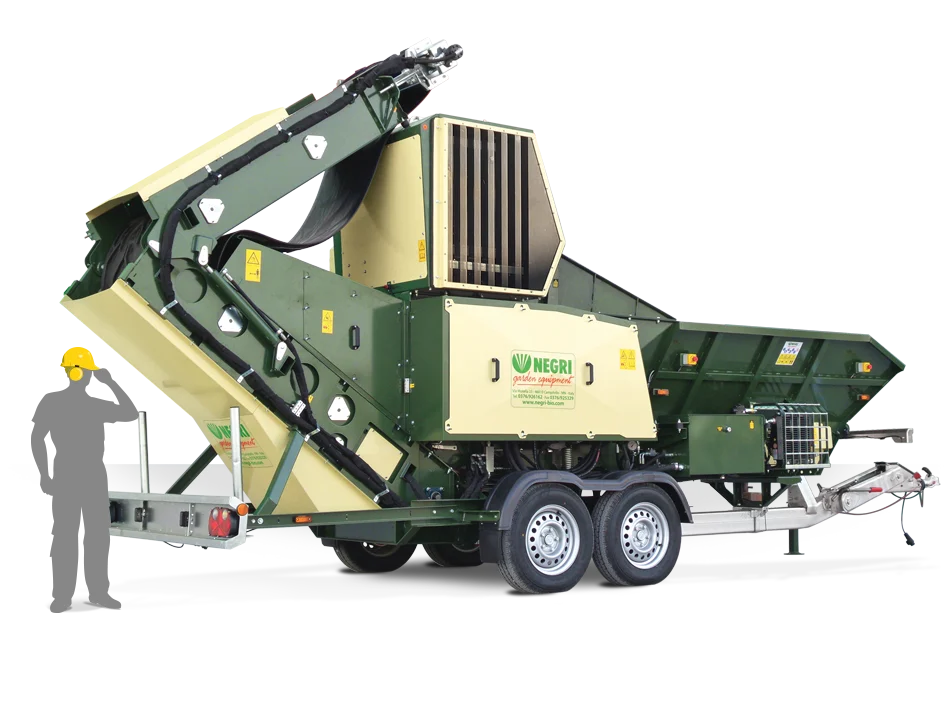
A wood chipper turns branches and brash into compact chips that are easy to move, spread or sell. A shredder does a similar job for softer, mixed green waste. They look alike at a glance, but they are built for different material.
Choosing the wrong one leads to blocked rotors, slow progress and frustrated operators. This guide explains what each machine handles, how drive options compare and the safety habits that matter on every job.
What a wood chipper does
A chipper uses sharp knives on a disc or drum to slice woody material into uniform chips. Hydraulic or mechanical feed rollers pull branches in at a steady rate, and a discharge chute blows the chips into a trailer or heap.
Chippers excel with branches, trunks, hedge cuttings with plenty of wood, and brash from thinning or tree work. The chips are clean and consistent, so they are useful for mulch, paths, animal bedding and biomass.
Disc vs drum chippers
Disc machines are simple and produce an even chip, which suits most arborists and estates. Drum machines often accept bushier material more easily and suit high volumes. Both rely on sharp knives, so blade care has a big effect on output.
What a shredder does differently
A shredder uses flails, hammers or blades to tear and break material rather than slice it. That makes it better for soft, leafy, wet and mixed green waste such as prunings, leaves, hedge clippings, plant waste and garden debris.
The result is a coarser, more broken material that composts quickly. A shredder is less fussy about awkward, twiggy loads that would wrap round chipper knives or block a feed roller.
- Choose a chipper for clean woody branches and a uniform chip.
- Choose a shredder for leafy, green and mixed waste destined for compost.
- Consider a wood chipper shredder combination if you handle both and want one machine, accepting some compromise on each task.
Professional green-space shredders
Landscapers, councils, golf courses and estates need more than a domestic garden shredder. Negri professional shredders and leaf vacuums are built in Italy for green space work and are known for ease of use and minimal maintenance, for private users and professional landscapers alike.
PTO wood chipper or engine-driven?
Drive type affects cost, mobility and how the machine fits your fleet.
- PTO-driven: a PTO wood chipper runs from a tractor you already own, with no separate engine to service. It suits farms and estates working near tracks and field margins.
- Engine-driven, towed: a self-powered machine on a road trailer suits arborists moving between sites.
- Tracked: a tracked machine reaches gardens, woodland and slopes where a tow vehicle cannot.
Match the tractor’s power to the machine’s requirement and check the PTO shaft guarding before every use.
Sizing a wood chipper for your work
The main figure to look at is the maximum branch diameter the machine accepts. Buy for the material you handle most often, not the occasional large limb, which can be cut down with a saw.
Think about volume too. A small machine fed constantly all day will struggle, while a larger machine with a wide throat and powerful feed rollers keeps a crew working without waiting. For very large volumes of biomass, a tub grinder is a different class of machine. Bizon tub grinders process biomass at up to 70 tonnes an hour, with interchangeable screens to set the output size.
Planning for the output
Think about where the chips or shredded material will go before you start. Blowing straight into a high-sided trailer saves double handling, while discharging onto a heap suits mulching on site. Clean wood chip can be used for paths, play areas, animal bedding or biomass boilers if it is dried and stored properly.
Shredded green waste composts well, so many estates and landscapers set up a simple windrow and return the compost to borders and planting schemes. Using the material on site cuts disposal costs and trips to the tip.
Wood chipper safety basics
Chippers and shredders are among the most dangerous machines in tree and grounds work. Most serious injuries happen when clothing or a hand is drawn into the feed. The HSE’s tree work safety guidance is a good starting point for safe systems of work.
- Train every operator and make sure they know where the emergency stop and feed controls are.
- Wear close-fitting clothing, eye and face protection, hearing protection and gloves without loose cuffs.
- Feed material butt end first from the side of the hopper, and let go once the rollers grip.
- Never reach into the infeed or climb on the hopper; push short pieces in with the next branch or a stick.
- Keep bystanders well away from the infeed and the discharge chute.
- Stop the engine and wait for the rotor to stop completely before clearing blockages or opening covers.
Chippers are loud, so plan for noise as well as feed-in hazards. Rotate operators on long days, fit hearing protection properly and keep the machine on firm, level ground with the wheels chocked or the tracks parked securely.
Keeping your machine working
Sharp knives and correctly set anvils make a wood chipper faster, quieter and more fuel efficient. Blunt knives cause the machine to pull material unevenly and put extra strain on bearings and belts.
- Check knives and anvil daily and turn or replace them before they become dull.
- Inspect belts, bearings and feed rollers for wear.
- Grease to the manufacturer’s schedule and keep the machine clean of sap and debris.
Conagri’s service and maintenance team offers scheduled servicing, on-site repairs and 24/7 support, and works to manufacturer standards so warranties are upheld.
Choosing the right wood chipper or shredder
Start with your material. Woody branches point to a wood chipper, green and mixed waste to a shredder, and very high volumes of biomass to a grinder. Then pick the drive type that suits how you move around and the power you already have.
You can explore our full range of forestry and green space equipment, or talk to the team in Crediton. Call +44 (0)1392 984258 or send us an enquiry to find the right machine.
Frequently asked questions
What is the difference between a wood chipper and a shredder?
A wood chipper slices woody branches into uniform chips with sharp knives and suits clean branches and brash. A shredder tears and breaks softer material with flails, hammers or blades and suits leaves, prunings and mixed green waste. Choose based on the material you handle most often.
Is a PTO wood chipper a good choice for a farm?
Often, yes. A PTO-driven machine runs from a tractor you already own, so there is no separate engine to maintain, and it works well along tracks, hedges and field margins. Make sure the tractor’s power matches the machine’s requirement and that the PTO shaft guarding is in good condition.
Can a garden shredder handle branches?
Domestic garden shredders are designed for light prunings and soft green waste, and most will only take thin branches. Thicker woody material needs a chipper with the right maximum branch capacity. Professional shredders handle larger volumes of mixed green waste but are still not a replacement for a chipper on heavy timber.
What safety equipment do you need to use a wood chipper?
Operators need close-fitting clothing, eye and face protection, hearing protection and suitable gloves without loose cuffs, plus safety boots. They should be trained in feeding, emergency stop use and clearing blockages safely, and must never reach into the infeed while the machine is running.