
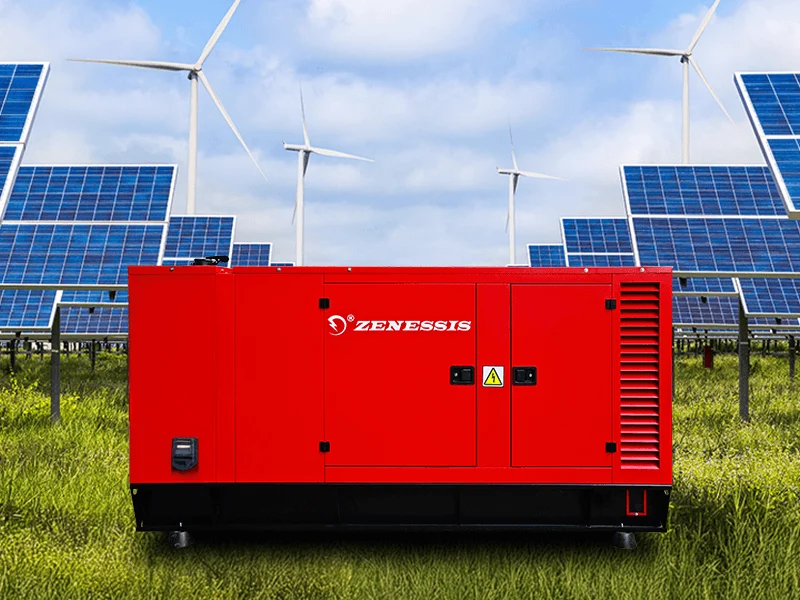
A diesel generator is the backbone of off-grid and backup power on farms and construction sites. It keeps milking parlours, grain dryers, site cabins, pumps and tools running when there is no mains supply, or when the mains fails at the worst possible moment.
Buying the wrong size costs money either way. Too small and it trips or struggles; too large and you pay for capacity you never use, with poor fuel economy and engine problems from light loading. This guide explains how to size and choose a generator, and when a PTO unit might suit you better.
Diesel generator basics: kVA vs kW
Generators are usually rated in kVA, while most equipment is labelled in kW. The two are linked by the power factor. For generator ratings this is normally 0.8, so kW equals kVA multiplied by 0.8. A 100 kVA set therefore supplies about 80 kW of real power.
Always check which figure a manufacturer quotes. Comparing one generator’s kVA with another’s kW is a common mistake, and it can leave you short of power.
Also check whether you need single-phase or three-phase output. Larger motors, grain equipment and welders usually need three-phase power, while site cabins and hand tools generally run on single-phase. Some diesel generator models can supply both, which adds flexibility on a mixed site.
How to size a diesel generator in 6 steps
Sizing is about the load you run at the same time, not the total of everything on site. Follow these steps for a realistic figure.
- List every item you need to power, with its running power in kW.
- Mark which items will run together at peak times.
- Add the starting load for motors, pumps, compressors and fans. These can draw several times their running current for a few seconds at start-up.
- Convert your total kW to kVA by dividing by the power factor.
- Add a margin for future equipment, typically 20 to 25 percent.
- Check the result with your dealer or electrician before you buy.
Avoid buying far more than you need. A diesel engine that runs for long periods at very light load can suffer from wet stacking, where unburnt fuel and soot build up in the exhaust. Aim for a generator that works at a healthy share of its rating most of the time.
Prime, standby and continuous ratings
Generators carry different ratings depending on how they will be used, so match the rating to the job.
- Standby rating is for emergency use during a mains failure, with limited annual hours. A standby generator should not run as the main power source.
- Prime rating is for sites with no mains supply, where the generator is the main source of power and the load varies.
- Continuous rating is for a steady, constant load running for long periods.
A farm that only needs backup during power cuts will look at standby ratings. A remote construction compound or a site generator powering cabins and tools all day needs a prime rating.
Features that matter on farms and construction sites
Soundproofing
A canopied, soundproofed diesel generator is essential near homes, livestock or busy urban sites. Lower noise also makes life easier for anyone working near the set all day.
Automatic start
For backup power, an auto-start control and automatic transfer switch will detect a mains failure, start the generator and move the load across. This matters for livestock ventilation, milk cooling and cold stores, where even a short outage causes problems.
Stage V emissions
Stage V is the current emissions standard for non-road engines. A Stage V diesel generator produces lower emissions and is often required for urban sites and rental fleets, so check what your client or local authority expects.
Fuel and storage
Store fuel in a bunded tank to prevent spills reaching drains or watercourses. Check the diesel generator’s fuel consumption at your typical load, not just at full load.
Zenessis and Energy diesel generators from Conagri
Conagri supplies two generator brands, covering small backup units to large industrial sets.
Zenessis generators for construction sites include Stage V industrial models suitable for urban sites and ready for rental fleets, plus stationary industrial units built for heavy, continuous use. Zenessis builds diesel and gas generators from 1 kVA to 5,000 kVA in Romania and Germany, and its generators are CE certified.
On the farm, Zenessis diesel generators for agriculture offer soundproofed residential models that start automatically, alongside stationary industrial generators for heavy use.
Energy Gruppi Elettrogeni, based near Vicenza in Italy, makes four Energy construction generator ranges: Rental, Industrial, Active and Midnight Light Towers, from compact silenced units to 330 kVA Stage V diesel sets for major civil works.
PTO generator: an alternative for farms
If you already own a tractor, a PTO generator can be a cost-effective alternative to a diesel generator. It runs from the tractor’s power take-off through a driveshaft, so there is no separate engine to service, and you can take power wherever the tractor can go.
The Energy Agripower PTO generator range for farms does exactly this, and the Energy Industrial range provides continuous prime or standby power for livestock buildings, grain dryers, milking parlours and cold stores, from 10 to over 160 kVA.
A PTO unit suits occasional and emergency use. If you need long running hours, automatic start or power while the tractor is busy elsewhere, a dedicated diesel generator is the better choice.
Installing and running a generator safely
Generators produce dangerous voltages, exhaust fumes and heat. A standby generator connected to a building must be installed through a proper changeover or transfer switch by a competent electrician, so it can never feed power back into the grid and endanger line workers.
Keep any diesel generator outdoors or in a well-ventilated enclosure, earth them correctly, and protect cables from damage on site. The HSE’s electrical safety at work guidance covers the basics. Service the engine at the manufacturer’s intervals and run standby sets on load regularly so they are ready when needed.
Getting the right diesel generator for your site
The right diesel generator is sized to your real load, rated for how you will use it, and quiet and clean enough for where it will run. Get those three right and it will give you reliable power for years.
Conagri supplies Zenessis and Energy generators with full sales, service and parts support. Tell us what you need to power and we will help you size it correctly. Contact the Conagri team, call +44 (0)1392 984258, or visit us at Burston Lane, Crediton.
Frequently asked questions
What size diesel generator do I need?
Add up the running load of everything you will power at the same time, then allow for the extra current electric motors draw when they start. Convert kW to kVA using the generator’s power factor, usually 0.8, and add a margin for future growth. A dealer or electrician can check your figures against the actual equipment.
What is the difference between kVA and kW on a generator?
kVA is apparent power, the total the generator supplies. kW is real power, the part that does useful work. They are linked by the power factor, typically 0.8 for generator ratings, so a 100 kVA generator delivers about 80 kW. Always compare generators on the same basis and check which figure the manufacturer quotes.
Is a PTO generator a good alternative to a diesel generator?
A PTO generator runs from a tractor’s power take-off, so there is no separate engine to maintain. It suits farms that already have a suitable tractor and need occasional or emergency power. A standalone diesel generator is better for long running hours, automatic start and sites without a spare tractor.
Can a standby generator start automatically in a power cut?
Yes, when it is fitted with an automatic transfer switch and auto-start control. The switch detects a mains failure, starts the generator and moves the load across, then switches back when mains power returns. It must be installed by a competent electrician so the generator cannot feed power back into the grid.