
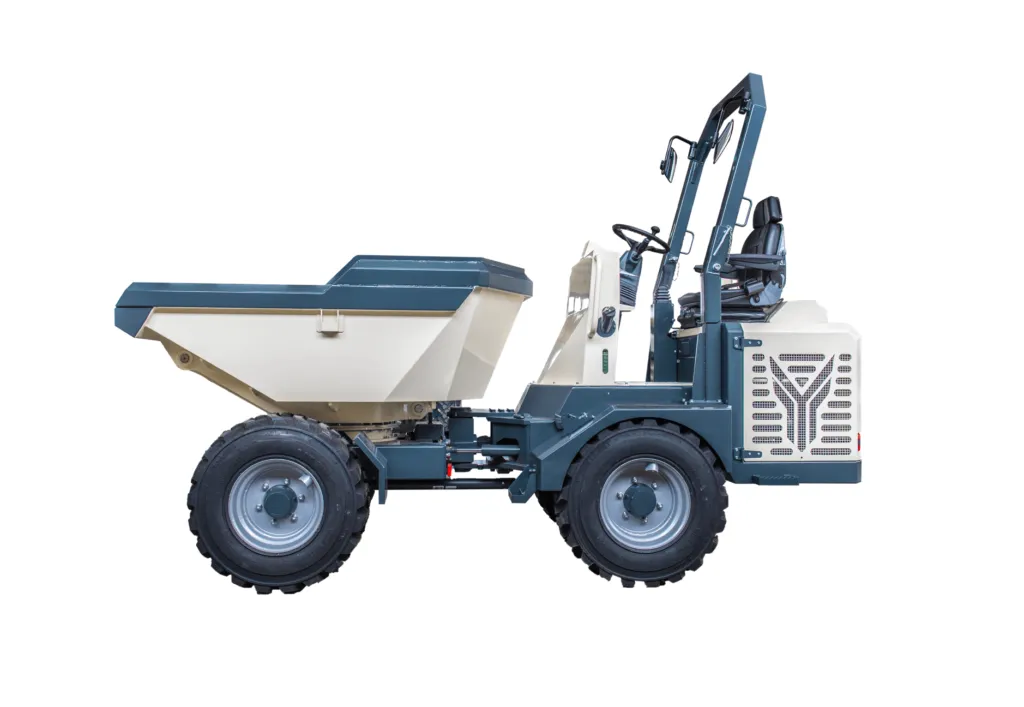
Dumper hire is one of the simplest ways to speed up groundworks, landscaping and building jobs. One machine can move spoil, hardcore, sand and concrete in a fraction of the time it takes with barrows, and it keeps your crew fresh for the work that matters.
The trick is booking the right machine. Skip size, drive type, tipping style and access all change how well a dumper suits your site. This guide walks through the checks to make before you book, so the machine that arrives is the one the job needs.
Why dumper hire makes sense for most jobs
Most building, landscaping and farm projects only need a dumper for a few days or weeks. Hiring means you pay for the machine while it is working, without tying up capital or paying for storage, insurance and servicing between jobs.
Our Hire Centre in Crediton offers flexible hire periods from one to five days, weekend rates for homeowners and long-term rates for contractors. We deliver to site across Devon and the Southwest, so you do not need a trailer or a towing vehicle.
Planning your hire period
Work out the sequence of the job before you book. If an excavator is digging footings on day one, the dumper is needed from the same morning, so book both together and avoid paying for one machine to wait for the other.
Be realistic about the weather and the ground. A wet week can slow muck-away, so a little slack in the hire period is often cheaper than a rushed finish. For a weekend garden project, a Friday delivery and Monday collection usually gives you two full working days.
When the machine arrives, walk round it with the delivery driver. Note any existing damage, check the fuel level and ask for a quick run through the controls, especially the tipping lever and parking brake.
Choosing the right skip size
Skip capacity decides how many trips you make. Too small and you waste time; too large and the dumper may not fit through the gate, cope with the ground or tip safely where you need it.
Think about the material as well as the volume. Wet clay, hardcore and concrete are far heavier per load than topsoil or bark, so a skip that looks generous can quickly reach its payload limit. Always work to the manufacturer’s rated payload, not the size of the skip.
Mini dumper hire for tight sites
Mini dumper hire is the usual choice for gardens, terraced houses and jobs with narrow side access. These compact machines can squeeze through gates and passages where a larger site dumper cannot go, and many are pedestrian operated.
Larger site dumpers for groundworks
On open sites, a ride-on site dumper with a bigger skip saves a lot of trips. It is the better option for bulk earthmoving, foundations and moving aggregate over longer distances.
Tracked or wheeled dumper hire
Drive type matters as much as size. Tracked dumper hire suits soft, wet or sloping ground, because tracks spread the weight and keep their grip where wheels would dig in. Tracks also help on lawns and finished ground, where you want to leave as few marks as possible.
Wheeled dumpers are quicker over firm ground and longer runs, and cause less wear on tarmac and concrete. For mixed sites, think about where the dumper will spend most of its working day, especially in winter.
High-tip, swivel and forward tip skips
How the skip tips decides where you can put the load:
- **Forward tip** is the simplest and most common layout, ideal for spreading material or tipping into trenches.
- **Swivel skips** rotate to tip to the side, which helps on narrow paths and along trenches where you cannot turn.
- **High-tip skips** lift the load before tipping, so you can fill skips, trailers or raised beds directly.
- **Self-loading** machines have a shovel or bucket so the dumper can load itself without an excavator.
If you are pouring concrete, a self-loading mixer may be worth a look. D’Avino self-loading concrete mixers and dumpers are built in Italy and offer 360-degree rotation.
Access, ground and site safety checks
Dumpers are involved in a significant share of construction site accidents, often through overturning on slopes or near excavations. Plan the route before the machine arrives, and use the HSE’s workplace transport guidance to set up safe routes.
Before your dumper hire starts, work through these steps:
- Measure the narrowest point on the route, including gates, doorways and gaps between buildings.
- Walk the route and note slopes, soft spots, kerbs, drains and overhead obstructions.
- Mark out a separate walking route for people where you can.
- Fit stop blocks at tipping points near trenches and excavations.
- Check that the operator is trained and competent on that type of dumper.
- Agree who will carry out the daily pre-use checks on brakes, steering, lights and the roll bar.
Operators should always wear the seat belt where a roll bar is fitted, never carry passengers and keep loads low when travelling. Driving across slopes, rather than straight up or down them, is a common cause of overturns.
Hire or buy: when ownership pays off
Dumper hire suits occasional work, but if you keep a machine on hire most weeks, ownership may cost less over time. Buying also means the dumper is always there when you need it.
If you are weighing up a purchase, HyperMec builds premium wheeled and tracked dumpers in Italy, with payloads up to 6,000kg and transfer speeds up to 30km/h. See the HyperMec dumper range for details of the Yanmar engines and Bosch-Rexroth transmissions they use.
For rough ground, the Agrimac DW35 hydrostatic site dumper uses in-wheel motors for a compact yet powerful design, and needs no DPF. Agrimac has built machinery in Spain since 1958. If ownership is the right call, our finance partners offer hire purchase and leasing to spread the cost.
Booking dumper hire with Conagri
The right dumper hire booking starts with three facts: the narrowest access point, the ground conditions and what you are moving. Get those right and the machine will keep your job moving instead of holding it up.
If you are planning a project in Devon or the Southwest, call our team on +44 (0)1392 984258 or send us an enquiry to check availability, rates and delivery. We are happy to talk through whether hiring or buying makes more sense for you.
Frequently asked questions
What size dumper should I hire?
Start with access and ground. Measure the narrowest gate, doorway or path on the route, then choose the largest skip that will fit through it and the ground can carry. For garden and small building jobs a mini dumper is usually enough. For groundworks and bigger moves, a larger site dumper saves trips and time.
Do I need training to use a hired dumper?
Yes. Anyone operating a dumper at work must be trained and competent for that type of machine, and employers must supervise them. Even on a home project, read the operating instructions, wear the seat belt where a roll bar is fitted, never carry passengers and keep well back from trench edges and slopes.
Is tracked dumper hire better than wheeled?
Tracked dumper hire suits soft, wet or sloping ground and narrow access, because tracks spread the load and grip well. Wheeled dumpers are quicker over firm ground and longer distances and cause less wear on hard surfaces. Choose based on the ground conditions you expect across the whole hire period, not just the first day.
When does buying a dumper make more sense than dumper hire?
Buying usually makes sense when you need a dumper most weeks, have several sites running at once or keep paying for long hires. Ownership also gives you control over availability. Compare a year of hire costs with finance repayments, servicing and resale value before you decide.