
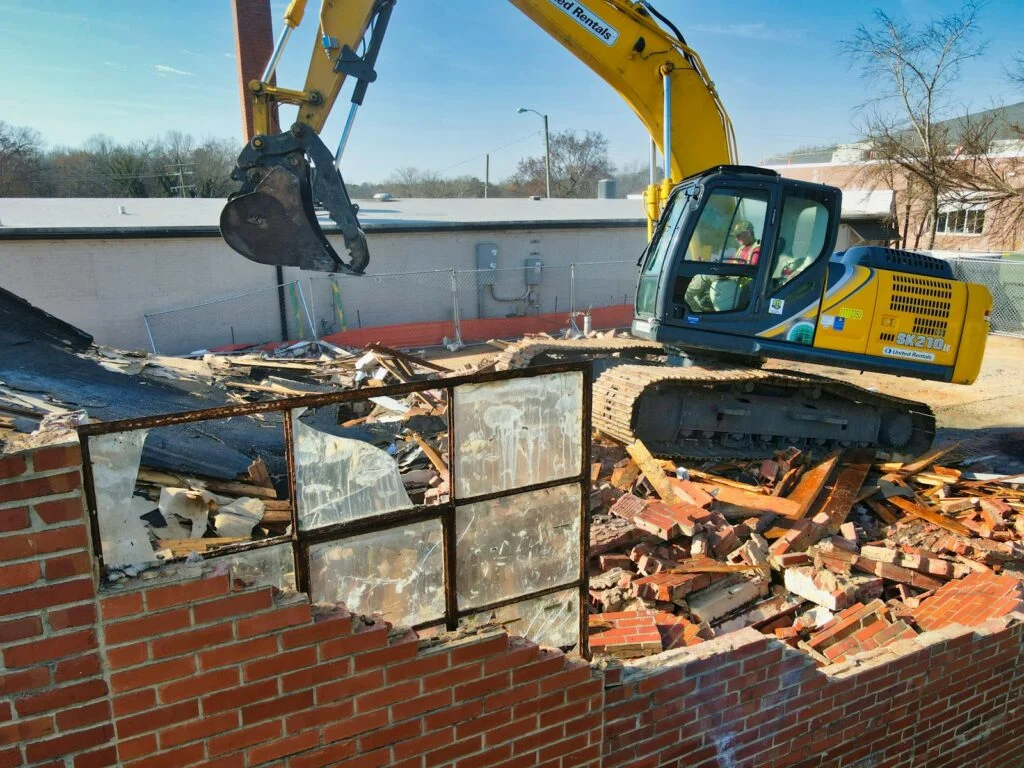
A hydraulic breaker turns an excavator, backhoe or skid steer into a powerful demolition tool. It breaks concrete, rock and tarmac far faster than hand tools, and it keeps operators away from much of the vibration and noise.
Getting good results depends on matching the breaker to the machine, choosing the right tool and using it properly. This guide covers how breakers work, how they compare with compressor-driven tools, and how to keep yours earning for longer.
What is a hydraulic breaker?
A hydraulic breaker is a percussion hammer that mounts on a carrier in place of a bucket. Oil from the machine’s auxiliary circuit drives a heavy piston up and down inside the body, and the piston strikes a hardened steel tool that does the breaking.
Many designs use a nitrogen gas charge to add force to each stroke. The working parts sit inside a housing, often a closed box type, which protects the hammer and helps reduce noise. A mounting bracket and quick hitch connect the unit to the dipper arm or loader.
The blow rate and energy per blow vary with size. A small hydraulic breaker on a micro digger delivers fast, light blows, while a large unit on a heavy excavator hits harder and more slowly.
Where breakers earn their keep
Contractors and farms use them for a wide range of jobs:
- Breaking up concrete slabs, bases and old foundations
- Trenching through rock, hardcore and frozen ground
- Removing tarmac and reinforced concrete during groundworks
- Secondary breaking of oversized rock in quarries
- Demolishing walls, footings and farm buildings
Hydraulic vs pneumatic breakers
A pneumatic breaker runs on compressed air, usually from a towed compressor. Hand-held versions are the familiar road drill, and they suit small cut-outs, kerbs and work in confined spots where a machine cannot reach.
The machine-mounted hydraulic type draws its power from the carrier, so there is no separate compressor to move around. It delivers far more energy per blow, handles bigger volumes and removes the operator from the tool, which greatly reduces hand-arm vibration exposure.
For a small concrete breaker job on a path or patio, a hand-held tool may be enough. For anything larger, an excavator breaker is quicker, safer and kinder on the people doing the work.
Matching a hydraulic breaker to your excavator
The most common cause of poor performance and early wear is a mismatch between hammer and carrier. Check three things before you buy or fit one, and have both specification sheets to hand when you compare models.
Carrier operating weight
Every model has a recommended carrier weight range. Too heavy, and the machine becomes unstable and its boom, pins and hydraulics take a beating. Too light, and the breaker struggles, the operator compensates with brute force, and both machine and tool wear out faster.
HPV Vistarini, for example, makes breakers to suit excavators from 0.5 to 40 tonnes, so there is a size for everything from a micro digger to a large site machine. You can see the range on our HPV Vistarini breakers page.
Oil flow, pressure and back pressure
Compare the hammer’s required oil flow and operating pressure with your carrier’s auxiliary circuit. Too little flow means a slow, weak blow rate. Too much flow or pressure can overheat the oil and damage seals.
Return line back pressure matters too. Many machines need a direct return to tank so the breaker can cycle freely. If you run Sunward excavators or skid-steer loaders, your dealer can confirm flow settings for the chosen hammer.
Choosing the right tool for your hydraulic breaker
The steel tool is what actually meets the material, so pick it for the job:
- Moil point: a general-purpose pointed tool for concrete, rock and digging into hard ground.
- Chisel: a flat blade for trenching, cutting a line through tarmac or splitting layered rock.
- Blunt tool: spreads the impact to fracture large boulders and hard, brittle rock.
- Asphalt cutter or spade: for neat cuts in tarmac and softer materials.
Replace worn tools before they mushroom or crack. A blunt, worn moil wastes energy and transfers more shock back into the hammer.
How to use a hydraulic breaker correctly
Good technique doubles the life of the tool and bushings. Follow these steps on every job:
- Position the tool at right angles to the surface, with the carrier stable and on firm ground.
- Apply steady down pressure through the boom before you start striking.
- Work from the edge of the material inwards, taking small bites rather than one deep hole.
- Break for short bursts, then reposition if the material does not crack within a few seconds.
- Never use the hammer or tool to lever, pry or sweep material aside.
- Stop striking as soon as the material breaks through.
Avoid blank firing
Blank firing happens when the hammer strikes without the tool pressed firmly against the material. The energy has nowhere to go, so it is absorbed by the retaining pins, bushings and body, causing cracks and expensive repairs. Keep constant contact and ease off the moment the material gives way.
Vibration and noise
Even machine-mounted breakers create high noise levels, and anyone using a hand-held tool faces serious hand-arm vibration risk. Use ear protection, keep people well clear of flying fragments, and plan work to limit exposure time. The HSE’s hand-arm vibration guidance explains how to assess and control the risk.
Hydraulic breaker maintenance
Daily care keeps downtime and repair bills low. Grease the tool bushing at the intervals in your manual, using chisel paste rather than general grease, and with the tool pressed down so the paste reaches the right place.
Check hoses, couplings and mounting bolts before each shift, and look for oil leaks around the body. Measure tool and bushing wear regularly, and have the gas charge and seals checked at the service intervals the manufacturer sets.
Keep the carrier’s hydraulic oil and filters in good condition, as hot or dirty oil shortens seal life. Conagri’s parts sourcing service covers hydraulics, filters and hoses, with 24/7 support for urgent orders.
Clearing up after the breaking
Once the material is broken, you need to sort and load it. A rotating grapple or other CMP attachments for excavators and skid steers can pick through demolition debris and load it far faster than a bucket alone.
Getting the right hydraulic breaker for your machine
The right hydraulic breaker is matched to your carrier’s weight and oil flow, fitted with the right tool and used with steady, controlled technique. Get those right and you will break more material with less wear on both hammer and machine.
Conagri supplies HPV Vistarini breakers with full sales, service and parts support. To discuss the right size for your excavator, contact the Conagri team, call +44 (0)1392 984258, or visit us at Burston Lane, Crediton.
Frequently asked questions
What is a hydraulic breaker used for?
A hydraulic breaker is a percussion hammer fitted to an excavator, backhoe or skid steer. It is used to break concrete slabs, foundations, rock, tarmac and frozen ground, and for trenching through hard material, demolition and quarry work. It turns the carrier’s hydraulic oil flow into rapid, heavy blows delivered through a steel tool.
What size breaker do I need for my excavator?
Start with the carrier’s operating weight, then check its auxiliary oil flow and pressure against the breaker manufacturer’s rating. A breaker that is too heavy strains the machine and reduces stability, while one that is too light wears quickly and works slowly. Your dealer can match the two using the specification sheets for both.
What is blank firing on a breaker?
Blank firing happens when the breaker strikes without the tool being pressed firmly against the material, often as the material gives way. The energy that should go into the work is absorbed by the breaker itself, damaging the tool retainers, bushings and housing. Keep steady down pressure and stop striking as soon as the material breaks.
How often should a hydraulic breaker be greased?
Most breakers need greasing at regular intervals during every shift, typically every couple of hours of work, using a high-temperature chisel paste rather than ordinary grease. Grease with the tool pressed down so the paste reaches the bushing. Always follow the interval and lubricant in the manufacturer’s manual for your model.