
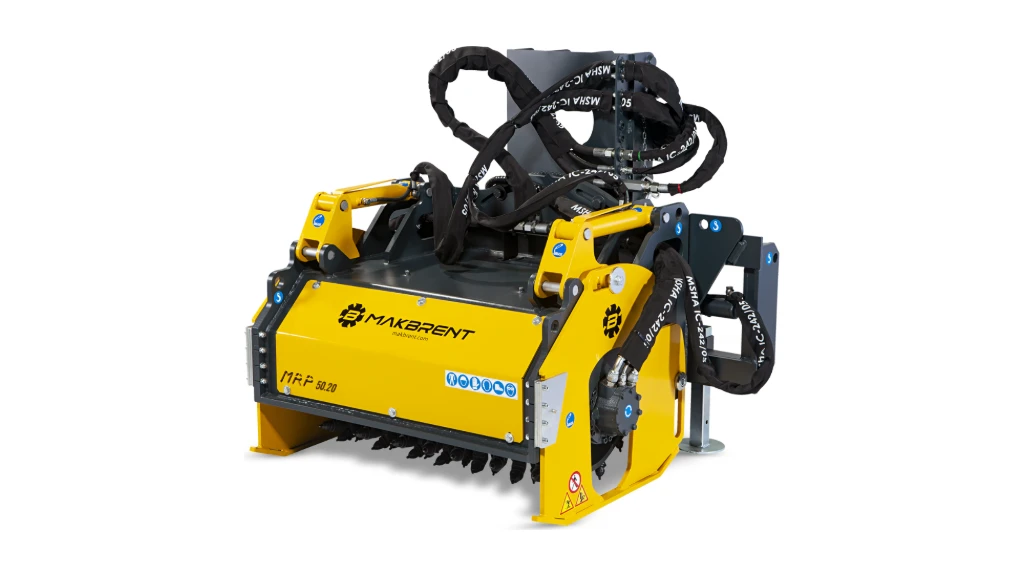
A road planer turns a skid steer, loader or excavator into a compact milling machine for patch repairs, trench reinstatement and tidy tie-ins. Instead of hiring a full-size milling machine for a few square metres, you can cut out a damaged area, leave clean vertical edges and lay new material the same day.
Getting the right attachment for your carrier makes a real difference to output and running costs. This guide covers drum widths, cutting depth, teeth, hydraulics and care, so you can pick a planer that suits the work you do most.
What a road planer does
A road planer, also called a cold planer attachment, uses a hydraulically driven drum fitted with replaceable carbide teeth. As the drum rotates, the teeth mill away asphalt to a set depth and the planed material is left in the cut or pushed aside, ready to be loaded away or reused.
The result is a flat, square-edged recess. That shape matters, because a new patch bonds and compacts far better against firm vertical sides than against crumbling, feathered edges.
Common jobs for an asphalt planer
An asphalt planer earns its keep on small and medium jobs where a dedicated milling machine would be overkill:
- Pothole and patch repairs on roads, car parks and farm tracks
- Trench reinstatement after utility or drainage work
- Cutting tie-ins where new surfacing meets old
- Removing high spots, bumps and trip hazards
- Cleaning up around manholes, kerbs and gullies
- Taking off old road markings or thin surface layers
Choosing a road planer for your carrier
The first decision is which machine will run the attachment. Each carrier type brings its own strengths for road planing work.
Skid steer and compact loader planers
Skid steers are the most popular carrier for a road planer because they are compact, quick between jobs and easy to transport. Most skid steer planers can shift sideways, so you can cut tight against a kerb or wall, and many tilt to follow the camber of the road.
The catch is hydraulic flow. A planer is a demanding attachment, and a loader with standard flow may struggle to keep the drum at speed. If you plan to plane regularly, a high-flow machine is usually the better choice.
Excavator-mounted planers
Excavator-mounted planers and drum cutters suit different work. They are often used for profiling, trimming rock, cutting trenches and planing awkward areas the loader cannot reach, such as embankments or the sides of cuttings. CM, the Italian manufacturer behind our range of CM crusher buckets and road planers, builds site attachments for excavators from 7 to 45 tonnes.
Drum width and cutting depth
Drum width sets how much ground you cover in one pass and how neat your patches look. Narrow drums suit trench reinstatement and small pothole repairs. Wider drums cover larger patches faster, but they need more hydraulic power and a heavier carrier.
Match the width to the jobs you see most often. If most of your work is utility trenches, there is little point paying for and powering a wide drum you rarely use fully.
Cutting depth is usually set by skids or depth wheels on each side of the drum. Always check the manufacturer’s rating for maximum depth, and remember that deep cuts are best taken in two or more passes. That protects the teeth, keeps the carrier stable and gives a cleaner finish.
Road planer teeth and drum care
The teeth are the wearing part of any road planer, and their condition decides how fast and how cleanly you cut. Worn or seized teeth slow the drum, increase vibration and can damage holders that are far more expensive to replace.
Follow a simple daily routine to keep your planer cutting well:
- Clean the drum and housing at the end of each shift so material does not set hard.
- Check every tooth for wear, chips and missing carbide tips.
- Make sure each tooth turns freely in its holder, as rotation keeps wear even.
- Replace damaged teeth in sets around the drum to keep the cut balanced.
- Grease the pivots and check hoses, couplers and the drive motor for leaks.
- Record hours and tooth changes so you can predict when the next set is due.
Keep spare teeth, holders and hoses on site. Our parts sourcing service can find bucket teeth, cutting edges, hydraulic parts and filters for most attachments and carriers.
Hydraulics, flow and safe road planing
A planer only works as well as the hydraulic supply behind it. Before you buy, compare the attachment’s flow and pressure requirements with what your carrier delivers at the auxiliary couplers. A mismatch leads to a slow drum, hot oil and poor productivity.
Check the case drain arrangement too, as many planer motors need one. Fit the right couplers, keep them clean, and make sure the hoses are routed away from pinch points.
Dust, noise and vibration
Road planing produces dust, noise and vibration, so plan for them from the start. Use water suppression where possible, keep people out of the work zone and give operators suitable protection. The HSE’s construction safety topics cover dust, noise, vibration and traffic management on site.
On live roads, put proper traffic management in place before you start. A road planer can throw small fragments, so keep a safe distance between the drum and anyone on foot.
Matching attachments across your fleet
A road planer often sits alongside other attachments that make a contractor more versatile. Crusher buckets turn broken asphalt and concrete into reusable fill, and screening buckets sort material on site, which cuts transport costs and reduces reliance on bought-in aggregate.
For skid steers, mini skids, tractors and loaders, CMP attachments are built in the USA from high tensile steel for landscaping, construction and land clearing work. If you are building a fleet from scratch, our full construction equipment range covers excavators, loaders, dumpers, compaction equipment and crushers.
Before you commit, think about the whole job:
- How many square metres do you plane each week?
- Which carriers do you already own, and what hydraulic flow do they offer?
- Will you reuse planings on site or haul them away?
- How quickly can you get teeth and parts when you need them?
Getting the right road planer for your work
The best road planer is the one matched to your carrier, your typical patch size and your crew’s skills. Get the hydraulics right, choose a sensible drum width and stay on top of tooth changes, and the attachment will repay its cost quickly on repair work.
If you would like advice on a road planer or a cold planer attachment for your machine, our team in Crediton can help with sales, service and parts. Call us on +44 (0)1392 984258 or send us an enquiry and we will talk through the options.
Frequently asked questions
What is a road planer attachment used for?
A road planer attachment mills away worn or damaged asphalt and some concrete surfaces to a set depth, leaving a clean, square-edged base for a new patch. Contractors use them for pothole repairs, trench reinstatement, removing high spots, cutting tie-ins at joints and clearing road markings, without bringing a full-size milling machine to site.
Can a skid steer run a cold planer attachment?
Yes, as long as the loader has a high-flow or suitable auxiliary hydraulic circuit that matches the planer’s flow and pressure requirements. Check the manufacturer’s rating for both the carrier and the attachment before you buy. Underpowered hydraulics slow the drum, raise heat and shorten tooth and motor life.
How deep can a road planer cut?
Cutting depth depends on the model and drum, so check the manufacturer’s rating for the attachment you are considering. Most planers have adjustable skids or depth wheels so you can set the depth for the job. Deep cuts are usually taken in more than one pass to protect the teeth and keep the finish even.
How often should I change road planer teeth?
Inspect the teeth daily and change any that are worn, blunt, chipped or not rotating freely in their holders. Worn teeth slow cutting, increase vibration and can damage the holders and drum. Keep a stock of spare teeth on site so a worn set never stops the job.