
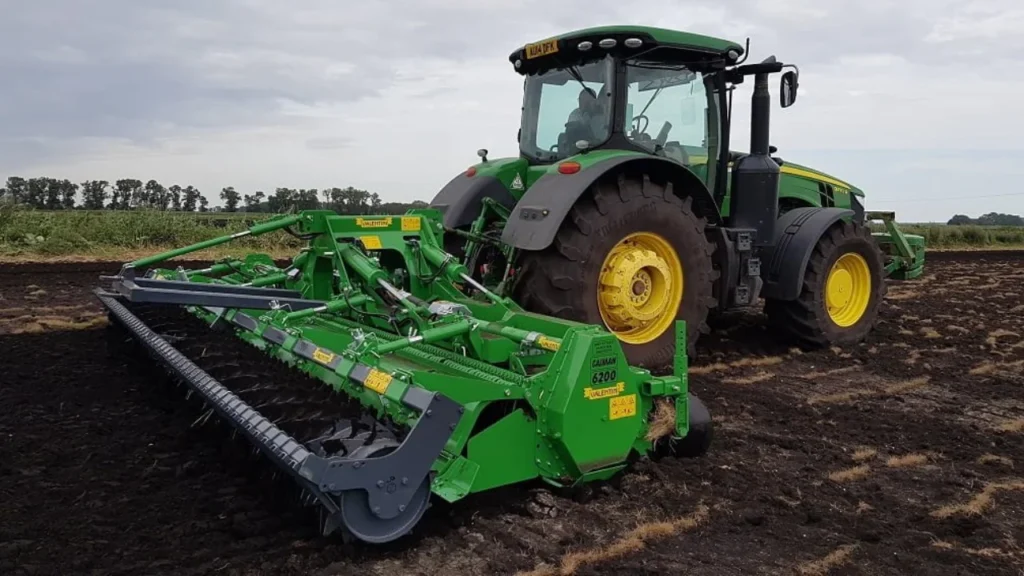
A stone burier cultivates soil, buries stones and surface debris, and leaves a level seedbed in a single pass. For sports pitches, landscaping, orchards and horticulture, it can replace several separate cultivations and a lot of hand raking.
This guide explains how the machine works, how it compares with a stone picker, and where it earns its place. It also covers setting up for a quality finish and matching a machine to your tractor.
What a stone burier does
The aim is a fine, firm, stone-free top layer, with coarse material moved down where it will not interfere with seeding, mowing or play. The stones stay in the soil profile, but out of the way.
Why bury stones rather than remove them?
On most turf and horticultural sites, the stones are small and numerous, so lifting them all would be slow and costly. Burying them below the root zone gives the same practical result at the surface, keeps soil volume on site and avoids a pile of spoil to dispose of.
How the reverse-rotating rotor works
Unlike a rotavator, the rotor spins against the direction of travel. Its blades lift soil up and over the rotor and throw it against a grid of bars at the rear of the machine.
Fine soil passes through the grid and falls on top, while stones, clods and turf are deflected down to the bottom of the worked layer. A rear roller then levels and firms the surface, leaving it ready for seed or turf.
Stone burier vs stone picker
Both machines deal with stones, but in opposite ways. Which one you need depends on the stones, the crop and the finish you want.
- Stone burier: keeps stones in the ground but buries them under fine soil. Best for turf, sports pitches, lawns and horticultural beds.
- Stone picker or collector: lifts stones out of the field. Best where large stones damage mowers and harvesters or must be removed permanently.
- Both together: some sites pick the largest stones first, then bury what remains for a fine finish.
For larger stones on grassland and fields, the Stoneless ATV stone collector lifts stones up to 50cm from the seat of your ATV, with a 500kg hopper.
Where stone buriers are used
Sports pitch renovation and construction
In sports pitch renovation, a stone burier works in worn turf, buries stones and debris, and leaves a level, consistent surface. That means faster pitch construction, better turf establishment and fewer stones working up to the playing surface later.
Timing matters. Most clubs and councils renovate at the end of the playing season, when the ground is workable and there is time for seed or turf to establish before play resumes.
Orchards, vineyards and horticulture
Before planting trees, vines or field vegetables, the machine produces clean, even ground. With bedformers and inter-row machines, the same approach builds raised beds for intensive growing.
Landscaping, lawns and equestrian work
Landscapers use stone buriers for new lawns and amenity grass, and equestrian centres use them to prepare paddocks and arenas. One pass replaces repeated rotavating, raking and rolling.
On domestic and commercial landscaping jobs, that time saving is often what makes a job profitable, especially where turf is laid the same day.
Seedbed preparation for a quality finish
Good seedbed preparation with a stone burier depends on soil moisture and setup more than horsepower. Work through these steps before the first full pass:
- Check soil moisture. The soil should crumble in your hand, not smear or form a ribbon.
- Mow or remove heavy surface vegetation if it is long, so it buries cleanly.
- Set working depth so stones are buried below the depth of future seeding, aeration and play.
- Adjust the rear grid or screen spacing for the size of stones and finish you need.
- Choose a low forward speed and steady PTO speed, then make a short test run.
- Dig a test hole to check the fine layer depth and level before carrying on.
Soil structure matters as much as surface finish. AHDB’s GREATsoils resources explain how to assess structure and avoid compaction before you cultivate.
Matching a stone burier to your tractor
Working width, depth and soil type decide the power you need. Gear-driven single or double side transmissions are matched to tractor power, with double side drives handling the heaviest loads.
The Valentini sports and orchard range covers tractors from 40 to 400 HP, with working widths up to 7.7m. It runs from the compact IRIS for small sites to the folding CAIMAN, plus bedformers and inter-row machines.
For turf and horticulture specialists, Selvatici stone buriers and spading machines come from a family firm near Bologna that has won five EIMA Technical Innovation awards. Its spading machines work down to 50cm, which helps where compaction runs deeper.
Think about access and transport too. A compact machine on a smaller tractor fits through gates and onto finished sites with less damage, while folding models suit contractors moving between large pitches and fields.
Buying a stone burier for sale
When you look at a stone burier for sale, list your tractor horsepower, typical site size and access width first. Large sports contractors may need a folding machine, while a groundsman or grower may be better served by a compact model.
On a used machine, check blade and rotor wear, grid bar condition, gearbox and side drive oil leaks, and roller bearings. You can compare the full sports and orchards equipment range, including aerators, cultivators and compact loaders, to plan the rest of your fleet.
Daily care and wear parts
Grease the PTO shaft and bearings daily, check gearbox and side drive oil levels, and inspect the blades and grid bars before each job. Worn blades leave a rougher finish and put extra load on the drive.
Clear wrapped turf and roots from the rotor ends, and wash the machine down after use in sticky soil. Store it under cover and replace wear parts over the winter so it is ready for the renovation season.
Choosing the right stone burier
The right stone burier saves passes, gives a cleaner finish and helps new turf or crops establish evenly. Match width and gearbox to your tractor, set up carefully, and work only when soil conditions are right.
For advice on models, sizing or finance, call Conagri on +44 (0)1392 984258, visit us in Crediton, or send us an enquiry.
Frequently asked questions
What does a stone burier do?
A stone burier cultivates the soil, buries stones and surface residue below the surface and leaves a smooth, level finish in a single pass. Its reverse-rotating rotor throws soil against a rear grid, so fine soil lands on top and coarse material is placed underneath. The result is ready for seeding or turfing.
What is the difference between a stone burier and a stone picker?
A stone burier keeps stones in the ground but places them below the working depth, under a layer of fine soil. A stone picker or collector lifts stones out of the field altogether. Buriers suit turf, sports and horticultural seedbeds, while pickers suit fields where large stones damage harvesters or mowers.
What size tractor does a stone burier need?
It depends on working width, depth and soil. Valentini’s sports and orchard range covers tractors from 40 to 400 HP, with working widths up to 7.7m, from the compact IRIS for small sites to the folding CAIMAN. Check the manufacturer’s horsepower rating for each model against your tractor’s PTO output.
Can a stone burier be used for sports pitch renovation?
Yes. It is one of the main tools for pitch construction and renovation. It works in old turf, buries stones and debris, and leaves a level, firm seedbed in a single pass, which speeds up seeding or turfing and helps the new sward establish evenly across the playing surface.