
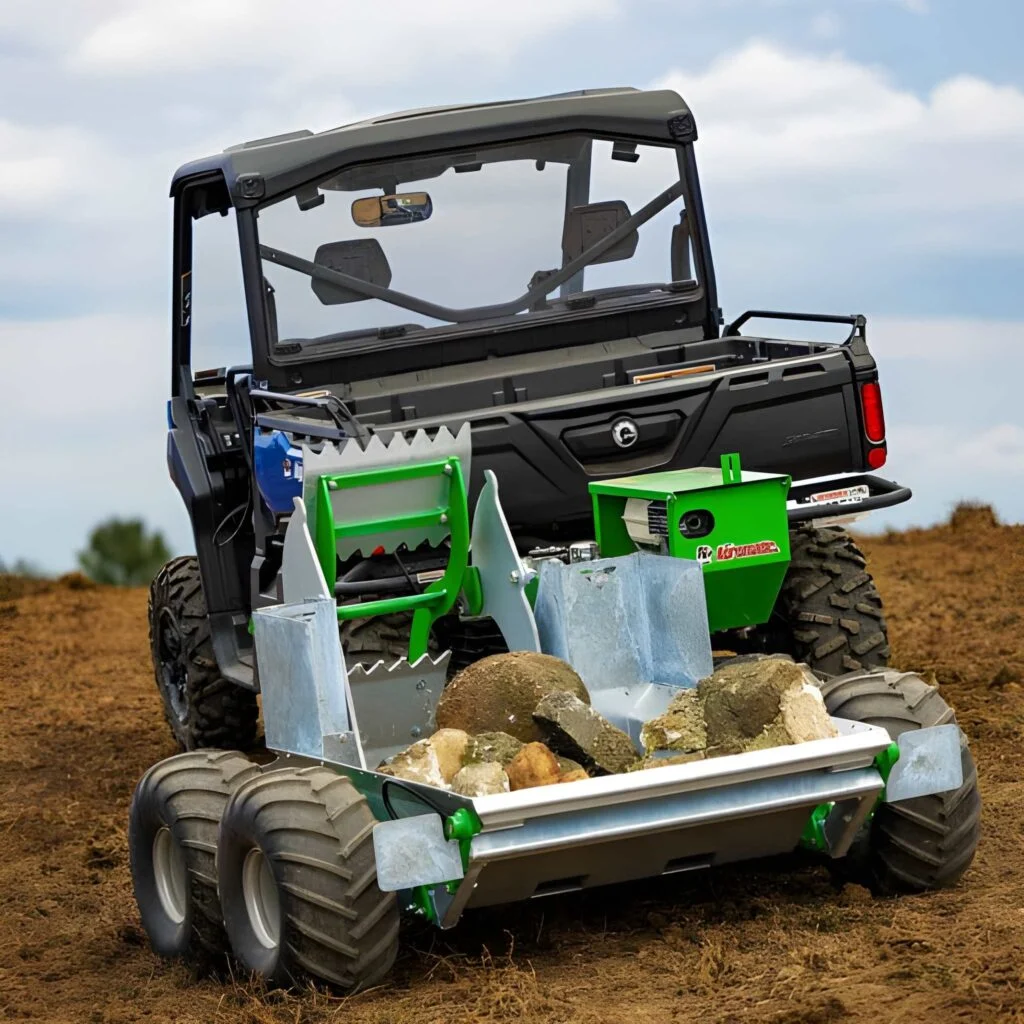
A stone picker is one of the most useful machines on stony ground. Every season, frost, rain and cultivation bring fresh stones to the surface, where they damage mowers, balers and drills, injure livestock and spoil the finish of grassland and sports pitches.
There is more than one way to deal with them, though. You can pick stones off, bury them below the surface or crush them where they lie. This guide compares an ATV stone collector, a tractor stone picker, a stone burier and a stone crusher, so you can match the method to your land and budget.
Why field stone removal pays off
Stones cost money in ways that are easy to miss. A single stone can break a mower blade, damage a baler pick-up or harvester header, and bring work to a halt at the busiest time of year.
Effective field stone removal also improves the quality of the crop. Stones in silage and haylage can damage feeding equipment, and stony seedbeds give uneven emergence. On paddocks, stones can bruise hooves and make grazing ground harder to manage.
Common signs that your fields need attention include:
- Frequent damage to mower blades, tines and pick-ups
- Visible stones after ploughing, cultivation or frost
- Uneven establishment in new leys and reseeds
- Rough, bumpy ground that slows machinery down
- Stones turning up in bales or silage clamps
ATV stone collectors for paddocks and grassland
For small farms, smallholdings and equestrian paddocks, an ATV-towed machine is often the most practical choice. It is light enough to use on soft grassland, cheap to run and can be operated by one person without a tractor.
The Stoneless ATV Stone Collector is a Danish-built stone picker that removes field stones from the seat of your ATV. It is built from galvanised steel, collects stones up to 50cm and has a hopper capacity of 500kg. More than 400 units have been sold since the first machines went on sale in 2019.
You will need a capable quad bike to pull it. AODES PathCross ATVs, including the 650S, 650L and 1000L, have adjustable shocks for rough ground and come with a two-year warranty.
Working safely with an ATV collector
Quad bikes are involved in a large number of farm accidents, so treat the extra weight of a loaded hopper with respect. Always wear a helmet, keep to the manufacturer’s towing and loaded weight limits, and take slopes straight up or down rather than across them. Empty the hopper before tackling steep or uneven ground, and keep children and bystanders well clear.
Tractor-mounted stone pickers for arable land
On larger arable farms, a tractor stone picker covers ground faster and handles bigger volumes. Most use a rotor or rake system to sweep stones from a windrow into a large hopper that tips into a trailer or a heap at the field edge.
Many growers windrow stones first with a stone rake, then pass along the rows with the picker. That two-step approach reduces the amount of soil collected and speeds up the job on very stony land.
What to look for in a tractor stone picker
When comparing machines, check:
- The size range of stones the machine can lift
- Hopper capacity and tipping height
- The tractor power and hydraulics required
- How much soil the pick-up system lifts with the stones
What to do with the stones you collect
Plan where collected stones will go before you start. Many farms tip them in a heap at a field corner or gateway, but they can be put to good use instead. Clean stone makes useful fill for farm tracks, gateways and drainage, and a crusher can turn larger stones into a usable track surface. Avoid tipping near watercourses, hedges or field drains.
Stone burier vs stone picker: which suits your ground?
The stone burier vs stone picker question comes down to whether you want stones gone or simply out of the way. A stone burier uses a rotor to turn the soil, burying stones and surface residue beneath the surface and leaving a smooth, level finish in one pass.
That makes buriers ideal for sports pitches, lawns, orchards and seedbed preparation, where a fine, even surface matters more than removing every stone. Valentini stone buriers range from the compact IRIS for small sites to the folding CAIMAN, and suit tractors from 40 to 400 HP with working widths up to 7.7m.
A stone picker is the better choice where stones would work back up and cause problems later, such as on grassland cut for silage, or where stones are too large to bury.
Buriers work best on land that has already been cultivated or is free of heavy sward, and they need dry, workable soil to leave a good finish. Working depth is set to suit the job, with deeper settings burying more stone but needing more tractor power. A stone picker, by contrast, can work on established grassland without disturbing the soil.
Stone crushers for heavy reclamation
On very stony or rocky ground, crushing can be more practical than removal. Stone crushers are PTO-driven, tractor-mounted machines that break stone and rock in place, so there is nothing to haul away.
Valentini stone crushers cover tractors from 70 to 400 HP. The ATTILA series crushes down to 70cm for heavy land reclamation, FRUTTI and LEON models handle lighter surface work, and RAMBO and IVAN suit track and road maintenance.
How to choose the right stone picker method
Use these steps to narrow down the options:
- Walk your fields and note the size and number of stones, and where they collect.
- Decide whether you want stones removed, buried or crushed.
- Consider the land use: grassland, arable, paddocks, pitches or tracks.
- Check which power units you have, from an ATV to a high-horsepower tractor.
- Think about timing, and plan stone work for dry spells after cultivation or frost.
- Factor in soil health, as heavy machines on wet ground can cause compaction.
AHDB’s GREATsoils guidance is a helpful resource on soil structure and compaction when planning field work.
Getting your stony ground under control
The right stone picker, burier or crusher depends on your land, your stones and the finish you need. Many farms use more than one method, such as an ATV collector on paddocks and a burier for reseeds.
Our team in Crediton can talk you through the options and provide sales, service and parts. Call +44 (0)1392 984258 or send us an enquiry to find the best way to clear your fields.
Frequently asked questions
What does a stone picker do?
A stone picker lifts loose stones from the surface of a field or paddock and collects them in a hopper, so they can be tipped away from the cropped or grazed area. Removing stones protects mowers, balers, drills and harvesters from damage, and improves the finish of grassland, seedbeds and sports surfaces.
Is a stone burier or a stone picker better?
It depends on your goal. A stone picker removes stones from the field altogether, which suits grassland and fields where machinery must run close to the ground. A stone burier turns stones and residue under the surface and leaves a fine, level seedbed in one pass, which suits pitches, lawns and seedbed preparation.
Can you pick stones with an ATV?
Yes. ATV stone collectors are towed behind a quad bike and operated from the seat, making them a light, low-cost option for paddocks and grassland. The Stoneless ATV Stone Collector, for example, collects stones up to 50cm and has a hopper capacity of 500kg. Check that your ATV can handle the loaded weight safely.
When is the best time to pick stones from a field?
Most farmers pick stones after cultivation or drilling, and on grassland in spring after frost and rain have lifted new stones to the surface. Pick when the ground is dry enough to carry the machine without leaving ruts, and before crops or grass grow tall enough to hide the stones.