
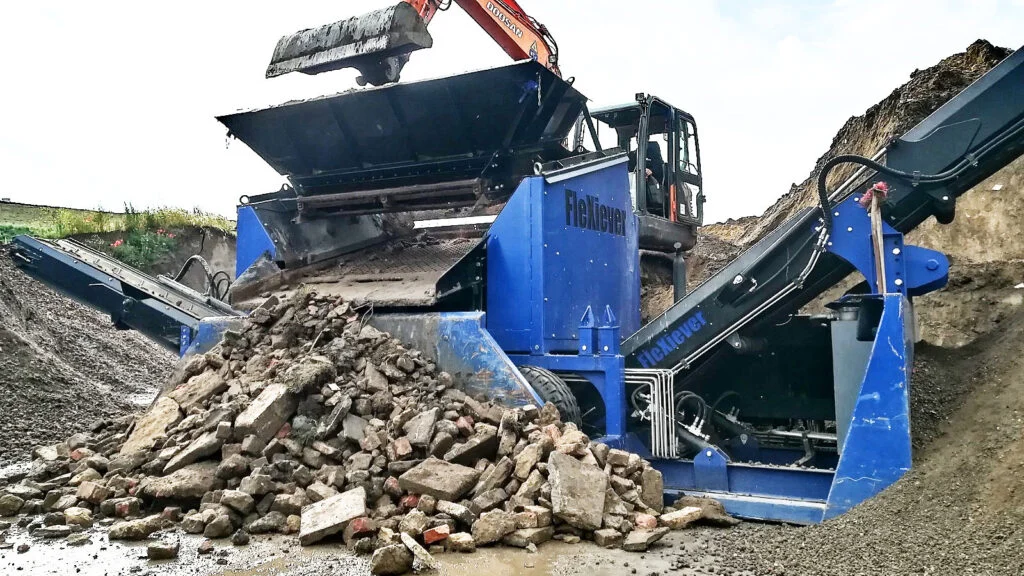
A trommel screen is one of the most useful machines you can own if you handle topsoil, compost, woodchip or recycled material. It turns a mixed heap into clean, graded product that is easier to sell, spread or reuse, and it does it far faster than a bucket and a riddle.
Choosing one is not only about size. You need to match the screening method, mesh, power source and mobility to your material and your sites. This guide compares the main types and gives you seven practical tips before you buy.
How a trommel screen works
A trommel is a long, rotating drum lined with mesh panels. Material is loaded into a hopper, fed onto the drum by a belt, and tumbles along as the drum turns. Anything smaller than the mesh falls through onto a conveyor or a stockpile, while oversize material travels out of the far end.
The tumbling action is the key. It breaks up clods, rubs soil away from stones and roots, and keeps damp material moving. That is why a trommel screen is often the first choice for wet British topsoil and fresh compost.
Where trommels earn their keep
- Topsoil grading for landscapers, groundworkers and turf suppliers
- Compost and green waste grading for farms and recycling sites
- Woodchip and biomass sorting for estates and forestry contractors
- Separating fines from mixed recycled material on construction sites
Trommel screen vs deck screen vs mini screener
There are three common ways to screen bulk material, and each has its place. The right one depends on the material, the output you need and how often you move the machine.
Vibrating deck screen
This type uses one or more flat, vibrating mesh decks set at an angle. It is very effective on dry, free-flowing material such as aggregates and crushed hardcore, and a two- or three-deck unit can produce several fractions in one pass. Damp, sticky soil can blind the mesh, so this method suits drier material best.
Trommel screen
A trommel handles damp, organic and mixed material well and produces a consistent product. It is usually larger and heavier than a mini screener, but it offers higher output and suits regular, high-volume work.
Mini and compact soil screener
A compact soil screener suits smaller jobs: garden landscaping, nurseries, equestrian surfaces and small compost operations. Electric mini units are quiet and can work close to buildings. They will not match a big trommel for tonnage, but they are easy to move and simple to run.
Spitfire and FleXiever screening options from Conagri
Conagri supplies two specialist screening brands, each with a different strength.
Spitfire Engineering screening equipment for construction and recycling is designed and built in Brixworth, Northamptonshire. The Raptor trommel screen, vibrating deck screens and conveyors of up to 75 m can be integrated into an existing plant or supplied as stand-alone units, in electric or diesel. Custom trommels can be built to order in any size.
For farms, Spitfire’s trommel and deck screens for agricultural users grade bulk material into clean, saleable fractions, with conveyors to move it where you need it.
FleXiever screeners are built in Eeklo, Belgium. The FleXiever range for construction and recycling sorts material at up to 100 tonnes per hour, with the road-legal FleXiever Mobile, the FleXiever Skid that separates three fractions, and the FleXiever Conveyor. For smaller and finer work, the FleXiever mobile and mini screeners for forestry and horticulture include electric Mini Screeners with mesh sizes down to 0.5 mm.
7 expert tips for choosing a trommel screen
Use these steps to narrow down the right screener before you ask for a quote.
- Start with your material. Wet topsoil, compost and woodchip favour a trommel. Dry aggregates and hardcore often suit a deck screen.
- Decide on your fractions. If you only need fines and oversize, one mesh may do. If you need three grades, look at a three-way split or a multi-deck unit.
- Size it to real output. Work out the tonnes per hour you need on a normal day, not a peak day, and allow for loading time.
- Match the loading machine. Check hopper width and height against the bucket on your loader or excavator so you can feed it without spillage.
- Choose your power source. Electric suits fixed yards with mains power and lower running costs. Diesel suits remote sites and contractors who move often.
- Think about mobility. A road-legal mobile unit saves on low-loader costs if you screen at many sites. A static unit suits a permanent yard.
- Check service and parts support. Mesh panels, belts and bearings wear. Make sure your dealer can supply them quickly.
Choosing the right mesh size for topsoil screening
Mesh size controls the quality of your finished product, so it is worth getting right. As a general guide, a coarser mesh gives a general-purpose topsoil for backfill and landscaping, while a finer mesh gives a premium product for lawns, raised beds and turf dressing.
Many operators keep two or three mesh sets and swap them for each order. Test your own material first, because stone content, moisture and organic matter all affect throughput. A finer mesh always reduces output, so balance quality against the tonnage you need.
Remember that a trommel screen working on damp material may need a slightly larger mesh than the same material would need when dry. Brushes or cleaning systems on the drum help stop the mesh blinding.
Running a trommel screen safely and efficiently
Screening plant has rotating drums, belts and pinch points, so treat it as you would any other work equipment. Guards must stay in place, lock-off procedures must be followed before clearing blockages, and operators need proper training. The HSE guidance on the Provision and Use of Work Equipment Regulations (PUWER) sets out your duties.
A few daily habits keep output high:
- Check belt tension and tracking before starting
- Look for torn or blinded mesh panels and replace them early
- Grease bearings and drum rollers at the maker’s intervals
- Keep the feed steady rather than dumping full buckets in one go
- Control dust with damping where needed, and keep people clear of the discharge
A well-maintained trommel screen will hold its value and keep producing a consistent product for years.
Getting the right trommel screen for your material
The best trommel screen is the one sized to your material, your output and the way you work. Whether you need a large Spitfire Raptor trommel for a recycling yard, a road-legal FleXiever Mobile for contract topsoil screening, or an electric mini screener for fine horticultural work, it pays to compare options side by side.
Conagri supplies both brands with full sales, service and parts support. Tell us what you screen and how much, and we will help you match the machine to the job. Contact the Conagri team, call +44 (0)1392 984258, or visit us at Burston Lane, Crediton, to talk it through.
Frequently asked questions
What is a trommel screen used for?
A trommel screen is a rotating drum fitted with mesh that grades bulk material by size. It is used for topsoil, compost, woodchip, green waste and some recycled aggregates. Fine material falls through the mesh while oversize items such as stones, roots and debris travel along the drum and drop out of the far end.
Is a trommel or a deck screen better for wet topsoil?
A trommel usually copes better with damp, sticky topsoil and compost because the tumbling action breaks up clods and helps keep the mesh clear. A vibrating deck screen tends to suit drier, free-flowing material and aggregates, where it can achieve high output and separate several fractions in one pass.
What mesh size should I use for screened topsoil?
It depends on the end use. A coarser mesh suits general landscaping and backfill, while a finer mesh gives a finish suitable for lawns, raised beds and turf dressing. Many operators keep two or three meshes and swap them to suit each order. FleXiever meshes go down to 0.5 mm for very fine work.
Can I tow a mobile soil screener on the road?
Some screeners are built to be road legal. The FleXiever Mobile, for example, can be towed between sites. Before towing any screener, check its plated weight, your vehicle’s towing limit, your licence entitlement, lights and braking, and secure loose parts. Ask the supplier to confirm the road-legal specification.